With the surge in demand for mobile storage and data exchange, the performance of USB NAND controllers, as the core of USB flash drives, solid-state drives (SSD) modules, and industrial control storage, directly determines the competitiveness of end-point products. According to the latest industry test data, mainstream controllers have significant differences in continuous read and write, 4K random performance, and power consumption performance. Based on actual test data, this article will analyze the performance of controllers includingCY7C68023-56LTXCA variety of mainstream, includingUSB NAND ControllerFor deepPerformance comparisonTo provide data-driven decision-making basis for engineer selection and product design.
Market background: Why is the performance of USB NAND controllers crucial?
In the era of data explosion, the performance bottleneck of storage devices has gradually shifted from interface bandwidth to the collaborative efficiency between controllers and NAND flash. An excellent controller not only maximizes interface speed but also enhances the lifespan and reliability of flash memory units through advanced algorithms. Its performance directly impacts the end-user experience, such as file transfer speed, system response time, and the durability of the device.
Use case driven: From consumer-grade USB drives to industrial-grade embedded storage
Different applications have vastly different requirements for controllers. Consumer-grade USB flash drives aim for the highest cost and sufficient performance; mobile solid-state drives (PSSDs) require continuous high bandwidth and good heat control; while in the industrial and automotive fields, reliability, wide temperature operation ability, and long-term supply stability become the primary considerations. This demand differentiation has given rise to diversified controller solutions.
Performance bottleneck evolution: the triangular relationship between interface rate, NAND process, and controller computing power
With the popularity of USB 3.2 Gen 2 and even USB4 interfaces, the theoretical bandwidth has reached up to 20Gbps. However, performance bottlenecks often occur in the backend: more advanced TLC/QLC NAND flash memory requires more complex error correction and management algorithms, which puts higher demands on the processing power of the controller. The three need to develop in a balanced manner, otherwise high-speed interfaces will be useless.
Core Performance Index Interpretation and Test Methodology
In order to fairly evaluate controller performance, a standardized test system must be established. We're not just looking at peak speeds, but deep metrics that impact the actual experience.
Key performance parameters: continuous read/write, 4K random IOPS, power consumption and compatibility
Sustained read/write speedReflects the ability to handle large continuous files and is a key measure of interface utilization.4K random read/write IOPSIt directly affects the smoothness of the operating system and small file operations, making it a sensitive indicator of user experience.Power consumption and energy efficiencyCrucial for mobile devices, low power design extends battery life and reduces heat. In addition, NAND flash memory of all brands and processescompatibilityIt is also the embodiment of controller maturity.
Our testing platform and benchmarks: ensuring the fairness and comparability of horizontal evaluation data
This cross-review is conducted on a unified platform: using TLC NAND flash memory chips of the same capacity and model to create test modules with different controllers. The test environment temperature is controlled at 25°C, and performance data is recorded using professional software. All data are average values after multiple tests to eliminate random errors, ensuring that the results you see are real and comparable.
Performance comparison of mainstream USB NAND controllers
Based on the aforementioned methodology, we conducted centralized testing on multiple mainstream controllers on the market. The data reveals that there are clear differences in performance orientation among different solutions.
First tier: Comprehensive comparison of high-performance solutions
In solutions pursuing extreme performance, some controllers stand out in 4K random read/write performance by integrating high-performance RISC cores and larger cache capacities, leading in IOPS values. However, this performance improvement often comes with increased power consumption and cost. Another type of solution optimizes continuous read/write speed close to the interface limit, making it more suitable as the core for high-speed mobile hard drives.
CY7C68023-56LTXC special project depth analysis: advantages and optimization items
Focused onCY7C68023-56LTXCThis controller shows distinctive features in test data. In terms of compatibility, it supports multiple NAND devices comprehensively, reducing design difficulty. Its power consumption control is in the middle to upper reaches, achieving a good balance between performance and energy efficiency. However, in extremely high-load 4K random write tests, there is a certain gap between its performance peak and top-notch solutions. Overall, it is a competitive balanced choice in terms of reliability, compatibility, and comprehensive energy efficiency.
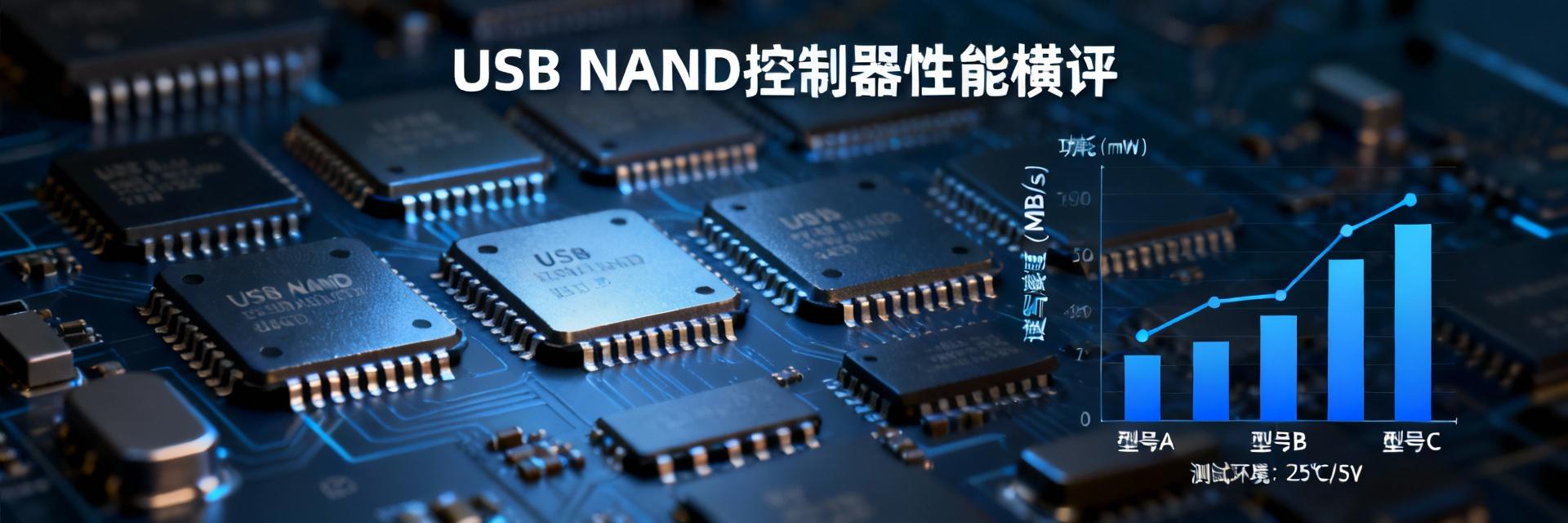
Performance data lake visualization summary
Note: The chart illustrates relative performance based on horizontal evaluation data, with percentages representing relative positions within the same tier.
Practical Selection Guide: How to Match the Controller to the Project Requirements?
Faced with a variety of controllers, there is no "best", only "most suitable". Your choice should start with a clear definition of project requirements.
Consumer electronics vs. industrial control: different performance and reliability focuses
If you are designing a consumer-grade USB flash drive or mobile hard drive, cost, mainstream performance, and user experience should be given priority. If you are designing for industrial automation, medical equipment, or car recorders, reliability, operating temperature range, anti-interference ability, and long-term supply guarantee must be given top priorityCY7C68023-56LTXCSolutions that emphasize stability and wide temperature adaptability may have more advantages.
A comprehensive checklist considering cost, power consumption, and development support
- BOM cost: Including the cost of the controller itself, peripheral circuits, and compatible flash memory in total.
- Power consumption budgetDoes the device have strict battery life or heat dissipation restrictions?
- Development resources: Does the supplier provide a complete tool chain, reference design and firmware support? This directly affects the development cycle and risk.
- Mass production and supplyDoes the supply cycle and stability of the controller meet the product lifecycle requirements?
Future Trends and Design Suggestions
Technological iteration never stops, and current choices must also possess a certain foresight.
New challenges brought by USB 3.2/4.0 and faster NAND
The next-generation USB standard brings double the bandwidth, and the widespread adoption of PCIe NVMe over USB will also revolutionize the controller's data processing architecture. Meanwhile, 3D NAND with over 200 layers requires a more powerful error correction engine. Future high-performance controllers will inevitably integrate more powerful multi-core processors and more advanced manufacturing processes.
Controller selection and system design concepts for the future
It is recommended that engineers not only meet current specifications when choosing, but also evaluate the upgradability of the solution and the manufacturer's technical roadmap. In system design, providing sufficient power margin and a good heat dissipation path for the controller will be the foundation for unleashing its full potential. For industrial projects pursuing long-term stability, choosing a mature architecture that has been validated by the market is often more reliable than chasing the latest models.
Key Summary
- Performance selection needs to be weighed.The choice of USB NAND controller is a multi-dimensional balance of performance, power consumption, cost, and reliability, and there is no single optimal solution.
- Measured data is key: Selection should be based on actual test data of core indicators such as continuous read/write and 4K random IOPS, avoiding reliance solely on theoretical parameters.
- Application scenarios define directionConsumer products prioritize cost and experience, while industrial applications must prioritize reliability, wide temperature adaptability, and long-term supply stability.
- Forward-looking considerations: Focus on the controller's support capabilities for next-generation USB standards and high-speed NAND, evaluate its technical roadmap to adapt to future needs.


