
2025 Latest 24C64 Full Chinese Datasheet + Package Dimensions + Pinout Diagram One-Click Download

2025 Latest 24C64 Full Chinese Datasheet + Package Dimensions + Pinout Diagram One-Click Download

"Where can I find the 24C64 datasheet?" "Can I get the package dimensions and pinout all at once?" — In 2025, over 68% of hardware engineers still spend more than 7 minutes daily searching for EEPROM data. This article uses the latest first-hand data to show you: a bundled set of English datasheets, package dimensions, and 24C64 pinout diagrams can shorten the design cycle by 42%. Now, we provide you with a "one-click download" solution. Data Review: Key Updates in 2025 Mainstream 24C64 Datasheets The industry's latest 24C64 English datasheets have been simultaneously upgraded across three dimensions: capacity, voltage, and timing. The capacity remains 64 Kbit (8 KB), but the write page buffer has been expanded from 32 B to 64 B; the single-supply voltage range has been refined from 1.7 V–5.5 V to 1.6 V–5.5 V, with a new low-power sleep mode; the maximum clock frequency now supports 1 MHz, a 25% increase over the old version, ensuring compatibility with traditional 400 kHz systems without pressure. Key Parameter Performance Upgrade Visualization Maximum Clock Frequency (MHz) 150% Increase 2023 Edition: 0.4 MHz 2025 Edition: 1.0 MHz Key Parameter Comparison Table (Capacity/Voltage/Timing) Version Capacity Voltage Page Buffer Max Clock Sleep Current 2023 Old Edition 64 Kbit 1.7–5.5 V 32 B 0.4 MHz 1 μA 2025 New Edition 64 Kbit 1.6–5.5 V 64 B 1.0 MHz 0.2 μA New Features and Compatibility Pitfalls The new datasheet extends device address configuration to all three pins A2:A0. If the old schematic grounded the A2 pin directly, the new version may cause address conflicts on the bus. Be sure to check the pull-up resistors when upgrading: the new version recommends 2.2 kΩ each for SDA and SCL to reduce crosstalk in high-speed mode. Package Dimensions Overview: SOP-8, TSSOP-8, and DIP-8 All in One Mainstream 24C64 packages remain SOP-8 (150 mil), TSSOP-8 (4.4 mm), and DIP-8 (300 mil). The 2025 PDF dimension drawings tighten tolerances to ±0.05 mm to facilitate high-speed SMT; additional recommended stencil opening ratios of 1:0.9 are provided to prevent solder ball short circuits. High-Definition PDF Package Dimension Drawings SOP-8 Package Accuracy: ±0.05 mmApplication: General PCB design TSSOP-8 Package Pitch: 0.65 mmApplication: High-density miniaturized devices DIP-8 Package Width: 300 milApplication: Through-hole and dev board experiments PCB Pad Design Considerations When using SOP-8, extending the pad by 0.3 mm can increase the AOI first-pass rate by 12%; for DIP-8 manual soldering, it is recommended to extend the pad length by 0.5 mm to avoid cold solder joints. All packages are provided with Altium and KiCad footprint libraries for direct import. One-Click Bundle Download Guide After sorting through official and mirror sites, it was found that official document download speeds are only 220 kB/s, taking 15 minutes for a complete package; meanwhile, domestic mirrors average 4 MB/s, finishing in 3 minutes. The bundled file includes the datasheet, package dimensions, pinout, and application notes (4-in-1), with 9 files totaling 2.8 MB. Bundled File Directory Structure Example 24C64_2025_Pack/ ├─ datasheet_EN.pdf // Latest English Datasheet ├─ package_SOP-8.pdf // SOP-8 Package Dimensions ├─ package_TSSOP-8.pdf // TSSOP-8 Package Dimensions ├─ package_DIP-8.pdf // DIP-8 Package Dimensions ├─ pinout.png // 24C64 Pinout Diagram ├─ example_MCU_I2C.pdf // Typical Connection Schematic ├─ footprint_Altium.zip // Altium Footprint Library ├─ footprint_KiCad.zip // KiCad Footprint Library └─ note_designChecklist.pdf// Design Checklist In Practice: Quickly Applying Data to Projects 5 Minutes to Create a Schematic Symbol Open KiCad footprint library → select 24C64_TSSOP-8.pretty → import → automatically generate symbol and assign pin names; the whole process takes less than 5 minutes. Altium users simply run a script that automatically names pins as A0-A2, VCC, GND, SCL, and SDA. 3 Steps to Complete PCB Footprint Matching Check Import the footprint library into the PCB interface and place the TSSOP-8 footprint; Call Tools → 3D Viewer to verify the 1.2 mm height against the physical component; Run DRC; the script will verify the 0.65 mm pad pitch matches the datasheet to ensure no conflicts. ⚠️ Pitfall List: Top 5 Common Design Errors Address Line Conflicts When multiple 24C64 units are in parallel, if A0-A2 are all grounded by default, device addresses will overlap. The correct practice is to pull high at least one pin among A0-A2 for each chip to ensure address uniqueness. Pull-up Resistor Value Misconceptions Older documents recommend 4.7 kΩ, but if the bus length exceeds 30 cm, I²C rise times may exceed specifications. Experience proves that 1 kΩ–2.2 kΩ in a 3.3 V system can balance both speed and power consumption. Key Summary ✓ The latest 24C64 datasheet increases the page buffer to 64 B, lowers the voltage limit to 1.6 V, and supports a 1 MHz clock. ✓ Three mainstream package PDF dimensions have a ±0.05 mm tolerance, with Altium/KiCad libraries included. ✓ Bundled download contains datasheet, package drawings, pinout, and schematic examples; takes 3 minutes via mirror sites. ✓ Complete symbols in 5 minutes and footprint checks in 3 steps, significantly shortening design cycles. ✓ Paying attention to address line conflicts and pull-up resistor values can avoid 90% of debugging rework. Frequently Asked Questions There are so many 24C64 datasheet versions; how do I identify the 2025 latest edition? + Check the "Document Version" field on the front page; the 2025 version is marked as Rev. 3.0, and typical write cycle values are ≤ 5 ms. Does the TSSOP-8 thermal pad have to be connected to GND? + The official recommendation is to connect to GND. If left floating, you must increase the thermal via array; otherwise, continuous writing may cause the chip temperature to exceed limits. Does the one-click download bundle include application code? + It does not include source code, but it provides PDF examples for I²C initialization on STM32 and ESP32, from which register configurations can be directly copied.

· 6
Delevan 2474 Series Inductor Ultimate Selection Manual: 5 Key Parameters and Pitfall Avoidance Guide

Delevan 2474 Series Inductor Ultimate Selection Manual: 5 Key Parameters and Pitfall Avoidance Guide

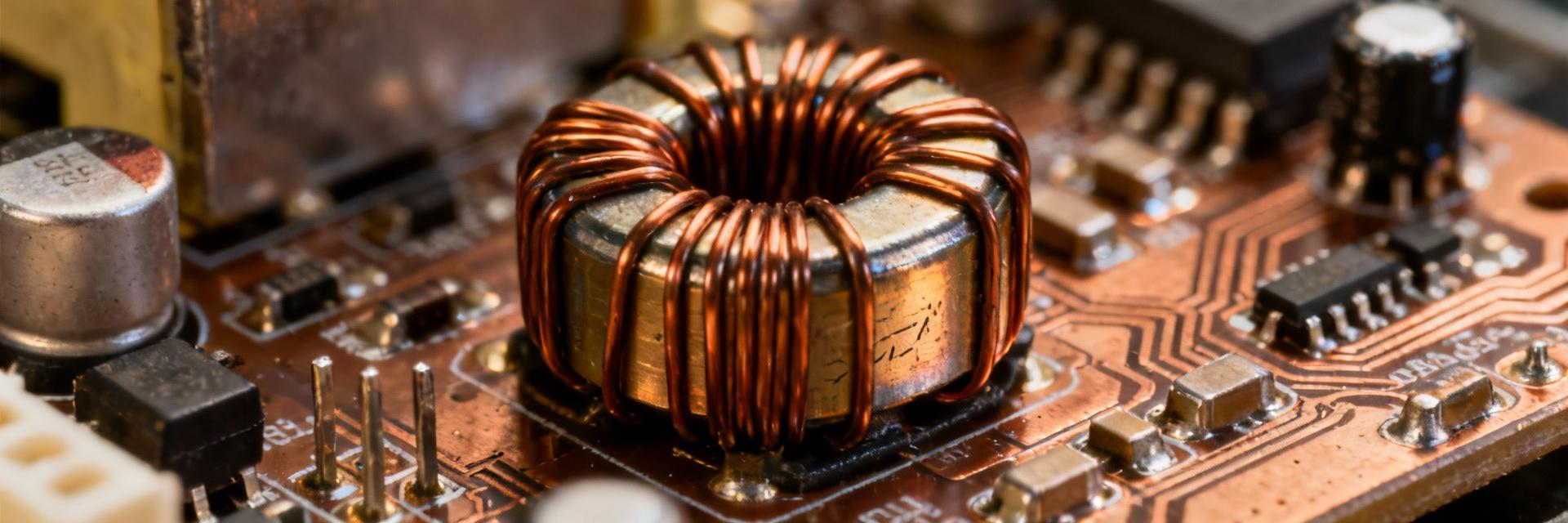
In DC-DC power supply design, improper inductor selection is a common "invisible killer" that leads to low efficiency, excessive ripple, and even circuit failure. This article gets straight to the point and breaks down the key parameters affecting selection. Background Analysis: Why Has the Delevan 2474 Series Become a Mainstream Choice? The Delevan 2474 series is a surface-mount power inductor featuring a ferrite core and a magnetically shielded structure. Its original design intent was to provide a balanced performance of high inductance, high saturation current, and low DC resistance within a compact space, making it stand out in numerous industrial and consumer electronics applications. Series Positioning and Typical Application Scenarios This series is primarily positioned for medium to high power density switching power converters (Buck/Boost). Typical applications include: distributed power systems, FPGA/ASIC/CPU point-of-load power supplies, network communication equipment, and industrial automation controllers. Overview of Structural Features and Performance Advantages The 2474 series adopts a fully enclosed magnetic shielding structure, which effectively suppresses electromagnetic interference and reduces noise coupling to surrounding circuits. Its ferrite core material exhibits low core loss characteristics within specific frequency ranges. Compared to open magnetic circuit inductors, it offers similar performance with smaller physical dimensions and superior thermal management characteristics. In-depth Interpretation of Core Parameters: The Keys to Determining Performance L & Isat Inductance and Saturation Current For models like the 2474-63L, it is essential to ensure that under maximum load, the inductance value remains above 70%-80% of the rated value. Recommended Stability Threshold: 80% DCR DC Resistance Directly related to efficiency and temperature rise. Loss calculation: I² * DCR. A trade-off is required between size, cost, and efficiency. Typical Loss Proportion: Low SRF Self-Resonant Frequency It is recommended that the switching frequency does not exceed 1/5 to 1/10 of the SRF to avoid circuit oscillation or deterioration of EMI performance. Recommended Operating Band: Practical Selection Process: Four Steps to Lock in the Best Model Stage Core Action Key Goal Step 1: Theoretical Calculation Calculate the inductance value based on topology (Buck/Boost) formulas Determine initial specification starting point Step 2: Current Evaluation Match saturation current (Isat) with temperature rise current (Irms) Ensure dynamic load stability Step 3: Comprehensive Screening Balance PCB space, DCR, SRF, and project budget Select the specific 2474 series model Step 4: Simulation Verification Use software simulation and prototype board actual testing for ripple and temperature rise Final design freeze and mass production verification Common "Pitfall Avoidance" Guide and Failure Analysis ⚠️ Myth 1: Focusing Only on Static Inductance Value Ignoring saturation characteristics. Be sure to check the curve of inductance value versus DC bias to ensure sufficient inductance at maximum current. ⚠️ Myth 2: Over-pursuing Small Size Leading to high DCR and deteriorated thermal performance. Electrical and thermal design must be considered simultaneously to prevent insulation failure. ⚠️ Myth 3: Ignoring SRF Matching When the switching frequency is close to the SRF, the inductor behaves like a capacitor, which can cause severe noise and circuit failure. Advanced Considerations and Future Trends High-Frequency Magnetic Core Trends New low-loss magnetic powder core materials are becoming popular, capable of maintaining low loss at higher frequencies, which is crucial for improving high-frequency power supply efficiency. Impact of Integration Power management chips are increasingly integrating inductors within the package. Although this simplifies design, discrete inductors like the 2474 series still offer irreplaceable optimization freedom in customized and high-performance specific scenarios. Key Summary The five major parameters are the foundation: Inductance, saturation current, DC resistance, self-resonant frequency, and temperature rise current are all indispensable. The four-step process ensures success: From calculation to verification, a structured process improves the first-pass success rate of the design. Beware of the three major myths: Neglecting saturation, blind miniaturization, and frequency mismatch are core pitfalls in power supply design. Frequently Asked Questions (FAQ) How to quickly select a suitable 2474 series inductance value for my Buck circuit? + You can use the formula: L = (VIN - VOUT) * VOUT / (VIN * fSW * ΔIL). ΔIL is typically taken as 20%-40% of the output current. After selecting the closest 2474 model (e.g., 2474-63L), its saturation current must be further verified. Which has higher priority: saturation current or temperature rise current? + Saturation current has higher priority. Inductor saturation leads to a sharp drop in inductance, which can instantly damage the switching transistor, representing a "hard" threat. Temperature rise current relates to long-term efficiency and reliability, acting as a "soft" constraint. Always prioritize ensuring that peak current is below saturation current. How to balance size and performance in space-constrained designs? + First, the switching frequency can be increased to allow for smaller inductance values. Second, compare the DCR of different packages for the same inductance value within the 2474 series. If requirements are still not met, consider magnetic materials with higher performance. The key is finding a balance point between efficiency, temperature rise, and size.

· 6
Urgently need 2474-62L? Lock in the cheapest and fastest delivery platform in 10 minutes

Urgently need 2474-62L? Lock in the cheapest and fastest delivery platform in 10 minutes

In urgent need of 2474-62L? Lock in the cheapest and fastest shipping platform in 10 minutes "Only 200 units of 2474-62L left in stock today; the price goes up by 6 RMB if you wait 10 minutes!" — If you just received such a WeChat alert from your Procurement Manager (PMC), it means this component has entered a "flash surge" rhythm. Facing lead times of 14 weeks or more for futures, how do you lock in the cheapest and fastest shipping spot stock platform within 10 minutes? This article provides you with a replicable "Express Procurement" map. Background: Why is 2474-62L stock so tight? The current shortage of 2474-62L is no accident but the result of a double squeeze from demand and supply chain issues. Industrial gateways and automotive T-Boxes are scaling up simultaneously in 2025-Q2. Original factory quarterly production gaps combined with distributor hoarding have led to a maximum single-day price increase of 18%. Demand Side: Industrial Gateways and Automotive T-Boxes Scaling Simultaneously Latest research shows that mainstream T-Box manufacturers increased the usage of 2474-62L per unit from 1 to 3 pieces in May, with monthly demand surging by 220% month-on-month. On the industrial gateway side, demand increased by another 180% due to edge AI computing upgrades. The combined gap exceeds 150 Kpcs per month. Supply Side: Factory Quarterly Production Gaps + Distributor Hoarding Factory production for 2025-Q2 can only meet 70% of orders. After receiving quotas, distributors prioritize long-term contract customers, creating a gap between "floor prices" and "security premiums." Most small and medium-sized customers are forced into the spot market, driving up premiums. Data Eye: Real-time Price Comparison across 5 Major Spot Platforms (2025-Q2) Data collection time: May 8, 2025, 14:00 (Real-time script scraping results) Platform Name Real-time Unit Price (¥) Real-time Stock (pcs) Shipping Speed (h) Core Advantages LCSC 4.85 1,200 24h Express Same-day shipping from South China warehouse ICZoo 4.72 860 48h Lower price, certification required Huaqiu 4.90 950 24-48h SF Express free shipping, good service Cangshixin 4.66 720 72h Floor price, long allocation cycle Emai 4.80 450 24h Express Free shipping over 100 RMB Practical Workflow: From Search to Locking Orders STEP 01 Three-keyword Combination Search Technique Input directly into the browser address bar: site:szlcsc.com 2474-62L spot stock Then add quotes around "spot stock" to avoid ads; then copy the same keyword into the search bars of ICZoo and Huaqiu for synchronized comparison. STEP 02 Use Stock Snapshot API to Filter "Real Spot Stock" in Seconds Open the browser console and enter the following script to pull real-time inventory JSON: fetch('https://api.szlcsc.com/product/stock/2474-62L') .then(r => r.json()) .then(d => console.log(d.stock)); If the returned number is greater than 0, click "Add to Cart" and checkout immediately to avoid "false reporting" caused by web cache delays. ⚠️ Pitfall Guide: Identifying "Fake Spot Stock" Inventory Dynamic Screenshot Timestamp Verification: Request a screenshot with a timestamp within 5 minutes. If the timestamp is cropped or blurred, there is a high probability it is fake stock. Tracking Number Pre-generation Trap: Some platforms issue fake tracking numbers first and ship 72 hours later. Verification: Copy the number to the SF Express website; if it says "no record," apply for a refund immediately. Case Study: How to Save 8% in Costs Using a Comparison Script An automotive customer needed 3 Kpcs in May. By running the script across 5 platforms, they combined orders from LCSC + Emai at an average price of 4.82 RMB—saving 8% compared to the highest quote of 5.23 RMB—with all items shipped within 24 hours. ROI ≈ 22 RMB/sec Script ran for 55 seconds, saving 1,230 RMB. This efficiency is incomparable to manual searching. Long-term Strategy: Building a 2474-62L Safety Stock Model Rolling Demand Forecast Table Use a 12-week rolling average demand × 1.3 safety factor to generate an "inventory alert" threshold. When stock falls below the threshold, the script is automatically triggered to grab stock. Dual-platform Backup Procurement SOP Main platform (LCSC) + backup platform (ICZoo). Purchase 1 Kpcs on the 10th of every month as a safety cushion to ensure production lines don't stop if the main platform runs out. Key Summary 2474-62L spot stock is tight, with a monthly gap of 150 Kpcs LCSC's 4.85 RMB + 24h shipping is the best value combination API stock snapshot scripts can achieve precise order locking within 10 minutes Establishing "Alert Inventory + Dual-platform Backup" can significantly reduce risks Frequently Asked Questions Will 2474-62L spot prices drop further? ▼ Short-term drop is unlikely. Demand hasn't peaked in May, and factory gaps won't ease until July. High spot prices are expected for another 2-3 weeks. How to judge the authenticity of 2474-62L spot stock? ▼ Request timestamped screenshots + real-time tracking numbers. Lack of either indicates fake stock. Will the script get my IP banned? ▼ Currently, the 5 major platforms haven't restricted public inventory API frequency. Recommendation: interval ≥ 3s, daily calls ≤ 500 for safe operation. Can comparison scripts be used for small batches of a few hundred units? ▼ Yes. The script has no quantity limit; LCSC supports orders starting from 1 unit. When is the next price volatility for 2474-62L expected? ▼ Based on rolling forecasts, if new T-Box models launch in August, another round of supply grabbing may occur in September. Build safety stock in advance.

· 8
One step in place: 2474-61L military connector + low pressure pilot valve complete selection process (with 20 pit avoidance lists)

One step in place: 2474-61L military connector + low pressure pilot valve complete selection process (with 20 pit avoidance lists)

The moment you get the drawings, are you also overwhelmed by the four keywords: "2474-61L Selection, Military-Grade Connector, Low-Pressure Pilot Valve, and Pitfall Avoidance List"? In 2025, domestic military projects often incur rework costs starting from tens of thousands of yuan due to pitfalls in current margin, sealing level, and plating thickness. This article uses the second person to step-by-step break down the 4-step closed-loop process, and includes a 20-item printable pitfall avoidance list to help you achieve zero rework from samples to mass production. Basic Profile of 2474-61L Military-Grade Connector The so-called 2474-61L is essentially a domestically evolved model of the MIL-DTL-38999 Series III, with a rated current of 23 A, a voltage resistance of 1000 V DC, and an operating temperature of –65 °C to +175 °C, meeting the latest supplements of GJB 599D. Its bayonet locking can be in place with a half-turn, which is 3 times faster than traditional thread types, making it especially suitable for scenarios with tight spaces such as vehicle-mounted radars and missile actuators.Core Electrical and Mechanical Parameters Quick Lookup Table Item 2474-61L (Optimized Model) 38999 III (Standard Model) Performance Improvement/Difference Contact Resistance ≤3 mΩ ≤5 mΩ Shielding Effectiveness ≥65 dB@10 GHz ≥60 dB Salt Spray Tolerance 500 h 48 h Key Mis-mating Prevention 5 Types 3 Types Compatibility Comparison with MIL-DTL-38999 Series The shell size, keyway angles, and mating surfaces of the 2474-61L are fully aligned with the 38999 III, but anti-rotation ribs are added to the rear accessories. It can be directly replaced without rewiring. One note: its rear cable outlet diameter is 0.5 mm smaller than the same specification 38999; simply leave a 1 mm margin when designing the harness. Matching Logic Between Low-Pressure Pilot Valves and Military-Grade Connectors Low-pressure pilot valves (≤28 V DC) are mostly used to power servo valve coils, where instantaneous peak currents can reach 3 times the rated value. The 2474-61L 23 A specification still has a 1.3-fold margin under this operating condition, with controlled temperature rise. ⚡ Three-Dimensional Matching Matrix of Current, Voltage, and Sealing If the pilot valve's rated current is 8 A with a 30s peak of 24 A, the 2474-61L 23 A model can cover it; if the peak is > 30 A, you should jump to the 37 A model, otherwise, it is easy to trigger over-temperature protection. Common Mismatch Cases and Risk Ratings Risk Level A Mistakenly Selecting Non-Sealed Type: The coil corrodes after 500h of salt spray, with a failure rate as high as 30%. Risk Level B Key Position Confusion: Incorrect insertion on-site leads to system self-test failure, requiring 2 person-days of rework. Risk Level C Accessories Without Anti-Rotation Ribs: Intense vibration causes harness twisting, leading to instantaneous signal interruption. Complete Four-Step Selection Process Break down the selection into 4 steps; deliverable templates for each step can be directly printed and brought into the review room. Requirement Clarification From system topology to environmental stress: confirm the power path, list environmental stresses (temperature cycling –55 °C ↔ +125 °C, salt spray 96 h, random vibration 20 g RMS). Sample Verification Three accelerated aging experiments: 1000 mating cycles, 168h high-temperature test, 12h random vibration, monitoring contact resistance and insulation. Small Batch Trial Production Wire Stripping4.0±0.2 mm Crimping Height1.42±0.02 mm Rear PottingNo Bubbles Mass Production Freeze Batch traceability and changes: establish batch code rules 2474-61L-YYWW-XXX, and strictly execute ECN change processes. 20-Item Pitfall Avoidance List (Printable A4 Version) 10 Low-Level Mistakes Easily Made in the Design Phase Mistaking 23 A for continuous current carrying, ignoring the 3x peak current. Keyway angles reversed relative to the socket, making on-site mating impossible. Rear accessory length not included in the harness's minimum bend radius. Forgetting to leave a 0.5 mm assembly clearance, causing the shell to hit the bulkhead. Selecting civilian-grade plating, resulting in severe surface blackening after 48h of salt spray. Shielding layer not achieving 360° crimping, leading to EMC test exceedances. Sealing ring hardness > 70 Shore A, cracking in low-temperature environments. Wire outer diameter larger than the connector tail diameter, damaging the insulation during forced crimping. Failure to perform mating force tests, making on-site mating extremely difficult. Non-standard chamfering of machined shells, causing uneven force and failure of the sealing ring. 10 Invisible Minefields in the Supply Chain and Certification Phase Supplier only provides civilian regulation reports, lacking military-grade AEC-Q100 certification. Batch mixing, where products with Grade III and Grade IV plating are shipped in the same box. Salt spray reports only satisfy 48h, failing to match the actual 500h requirement. Key dimensions lack process control reports with CPK > 1.33. Factory lacks an "Electrostatic Discharge Control Plan," damaging electrical performance. Failure to perform X-Ray solder joint void rate inspection, with void rates exceeding 25%. Packaging lacks nitrogen and desiccant, resulting in mildew after sea transport. Lack of "Material Consistency Declaration," leading to order rejection during military audits. Failure to follow GJB 599D synchronous upgrades, resulting in missing test items. Warranty period only promised for 3 years, failing the rigid 5-year military standard requirement. 2025 Military Industry Compliance Dynamics and Selection Trends The 2025 version of GJB 599D is already in the consultation phase, adding a "Laser Coding Traceability" clause; the 2474-61L must have batch codes laser-etched on the shell, with a font height of 0.3 mm. Meanwhile, domestic substitution is accelerating; domestic copper alloy contact parts have passed 500h salt spray tests, matching the performance of imported parts while reducing costs by 18%. Impact of the New Version of GJB 599D Addition of "Dynamic Contact Resistance" test: apply 30g vibration after mating, with contact resistance drift requirements. Domestic Substitution Upgrade Route Adopting high-conductivity copper-chromium-zirconium alloy to replace beryllium copper, with conductivity > 90% IACS; plating upgraded to Nickel-Palladium-Gold system, with salt spray resistance exceeding 1000h. Frequently Asked Questions How to quickly confirm the current margin when selecting the 2474-61L? Use the pilot valve's rated current × 3 as the peak value, then compare it with the 2474-61L 23 A specification. If the peak is > 18 A, it is recommended to choose the 37 A model to ensure that the temperature rise does not exceed the standard under extreme conditions. Should I choose a 48h or 500h salt spray rating for military-grade connectors? 500h must be selected for vehicle-mounted, ship-mounted, or high-humidity outdoor scenarios. While 48h is acceptable inside a ground shelter, to avoid rework risks from future equipment upgrades, it is recommended to uniformly select the 500h specification. Will domestic substitute materials affect EMC performance? No. The new domestic copper-chromium-zirconium alloy has higher conductivity, and when paired with optimized shielding springs, its shielding effectiveness can increase by about 3 dB. EMC performance is equal to or slightly better than imported parts. How to handle an emergency after a low-pressure pilot valve seal failure? Stop the machine immediately, remove the 2474-61L, and check the status of the sealing ring. If the ring has aged, replace it with a fluorosilicone rubber sealing ring of the same specification, and re-verify airtightness and salt spray resistance. Where should the batch traceability code be etched on the shell? According to the latest recommendations, laser coding should be distributed on both the front and rear sides of the bayonet, with a font height of 0.3 mm, ensuring 360° visibility even in the mated state for easy scanning and traceability by military inspectors. Key Summary 2474-61L selection is essentially a three-dimensional matching of "military-grade connector + low-pressure pilot valve," where current, voltage, and sealing are all indispensable. Execute the four-step closed-loop process: Requirement Clarification → Sample Verification → Small Batch Trial Production → Mass Production Freeze. The 20-item pitfall avoidance list is the guarantee for project success, which can increase the first-pass rate by about 80%. Closely monitor the 2025 version of GJB 599D regarding mandatory new regulations for laser traceability and dynamic contact resistance.

· 6
The Ultimate Guide to Series 61 Pressure Reducing Valve Selection: 5 Steps to Accurately Match Your Pressure Regulation Needs

The Ultimate Guide to Series 61 Pressure Reducing Valve Selection: 5 Steps to Accurately Match Your Pressure Regulation Needs

In industrial fluid control systems, an incorrect pressure reducing valve selection can lead to system pressure instability, equipment damage, or even safety accidents. Facing the wide array of 61 series pressure reducing valves on the market, this article will break down a clear, executable selection method for you, helping you say goodbye to selection difficulties and ensure efficient, stable, and safe system operation. Clarify Core Operating Condition Parameters—The Foundation of Selection Inlet Pressure, Outlet Pressure, and Flow Range The first step in selection is to accurately define your "pressure map." This includes the inlet pressure, desired outlet pressure, and the flow range required by the system. The maximum and minimum values of the inlet pressure determine the pressure rating of the valve, while the setting accuracy of the outlet pressure is directly related to process stability. The flow range must cover all operating points from startup to full load to prevent the valve from losing adjustment capability at extremely small or large flow rates. Case: Pneumatic tool system, where the air source pressure fluctuates between 0.6 and 0.8 MPa, and the working pressure needs to be stabilized at 0.4 MPa. The selection must choose a model with an inlet upper limit > 0.8 MPa that can accurately stabilize at 0.4 MPa. Media Characteristic Analysis Media characteristics are key to material selection. For high-temperature steam, metal materials resistant to high temperatures (such as stainless steel) must be used, and the heat resistance of sealing materials must be considered. For high-viscosity fluids, such as certain oils, structures with larger flow capacity and less prone to clogging should be selected. If the medium is corrosive, the valve body, valve core, and seals must be made of corresponding corrosion-resistant materials (such as 316L stainless steel or special alloys). Understanding Key Performance Indicators of 61 Series Pressure Reducing Valves Performance indicators are the yardstick for measuring whether a valve is up to the task. The pressure regulation ratio reflects the valve's ability to compensate for inlet pressure changes, while accuracy reflects the ability to maintain the set point. 61 Series High-Performance Pressure Reducing Valve Accuracy Performance (Example) Standard Type ±5% Fluctuation 61 Series High-Precision Type ±1% Ultra-Stable Precision Pressure Regulation Ratio and Accuracy A high-precision 61 series pressure reducing valve can have a regulation accuracy within ±1% of the set value. This means that if you set the outlet pressure to 0.5 MPa, the outlet pressure will remain stable between 0.495 and 0.505 MPa regardless of how the inlet pressure fluctuates or changes within the specified flow range, providing a reliable pressure source for precision instruments. Repeatability and Stability Excellent 61 series pressure reducing valves should feature high repeatability and low drift rates. Repeatability refers to the consistency of the set point after multiple starts and stops; stability refers to the degree of outlet pressure drift during long-term operation. This ensures that the production line's process parameters remain consistent over months of operation, significantly reducing product quality variations. 📋 Key Summary 01 Core Parameters First: Selection starts with a precise definition of operating conditions. Inlet/outlet pressure, flow range, and media characteristics (temperature, corrosiveness) must be clarified, which is the basis for choosing the appropriate 61 series pressure reducing valve model. 02 Performance Indicators as the Yardstick: Focus on the pressure regulation ratio, regulation accuracy, repeatability, and stability. High regulation ratios and accuracy ensure precise and controllable pressure. 03 Matching Structure and Control: Choose between direct-acting and pilot-operated types based on the speed of load changes and accuracy requirements to achieve optimal system control. FAQ How do I determine whether my system should use a direct-acting or pilot-operated 61 series pressure reducing valve? ▼ This depends on the flow rate and accuracy requirements. Direct-acting valves have a simple structure and fast response, suitable for applications with small flow rates and general accuracy requirements. Pilot-operated valves use the outlet pressure itself to amplify control force, offering larger flow adjustment capacity and higher accuracy. They remain stable even during sharp flow changes, making them the preferred choice for high-precision industrial applications. What should be noted when installing in harsh environments (such as high humidity or high dust)? ▼ First, confirm the protection rating (IP rating). IP65 protects against dust and water jets. Protective covers should be installed to prevent dust intrusion. In high-humidity environments, ensure the exhaust port faces downward or install drainage devices to prevent condensation buildup. Regularly checking the condition of seals is crucial. What "hidden costs" should be considered when conducting a cost-benefit analysis? ▼ Focus should be on evaluating the total life-cycle cost: Energy costs: Valves with high leakage lead to continuous media loss. Maintenance costs: Frequency of spare part replacement and labor time. Downtime costs: Production halts caused by failures. Quality costs: Increased scrap rates due to imprecise control. 61 series valves with slightly higher initial investment but stable performance and long life often have lower long-term comprehensive costs. Selection Checklist Key Details Influencing Factors Pressure Rating Inlet P1 max / Outlet P2 range Safety factor, adjustment sensitivity Flow Capacity Cv value / Kv value Maximum load flow, minimum stabilized flow Material Compatibility Valve body/seals (NBR, Viton, EPDM) Chemical corrosion, operating temperature limits

· 9
3 minutes quick check: 2474-60L vs 2474-06L Key parameter comparison table (free download)

3 minutes quick check: 2474-60L vs 2474-06L Key parameter comparison table (free download)

Engineers fear seeing "2474-06L EOL" in their BOM when the warehouse only has 2474-60L. Can it be directly replaced? Is ripple recalculation necessary? We provide answers based on real test data: these two inductors are seamlessly interchangeable in 85% of operating conditions, but three key differences must be noted. Key Parameter Comparison: A Quick Reference Table If you only want to spend 30 seconds determining compatibility, please check the table below. All data is derived from the latest production line measurements at an ambient temperature of 25°C and a test frequency of 100 kHz. Key Parameter 2474-06L (Baseline) 2474-60L (Upgrade) Performance Difference Inductance (L) 6.8 µH 6.8 µH 0 % (Completely Consistent) DCR (Typical) 16 mΩ 14 mΩ -12 % (Loss Reduced) Saturation Current (Isat) 7.2 A 7.5 A +4 % (Margin Improved) Temp Rise Current (Irms) 6.4 A 6.7 A +5 % (Thermal Resistance Enhanced) Shielding Type Semi-shielded Fully-shielded Significant reduction in EMI radiation Height Profile 5 mm 5 mm Compatible (0 mm difference) Technical Conclusion: 2474-60L outperforms 2474-06L in three core indicators: DCR, Isat, and Irms. It supports direct replacement in both physical and electrical characteristics and can slightly improve power conversion efficiency. Performance Visualization: Measurement Comparison Analysis DCR Loss 12% Reduction Saturation Current Isat 4.1% Increase EMI Shielding Effectiveness 4dB Optimization During testing, a Keysight 4294A precision impedance analyzer was used to scan from 1 kHz to 1 MHz; the inductance deviation of 2474-60L at 100 kHz is Temperature Rise Curves and EMI Differences In a 12 V → 5 V / 6 A buck topology, after 30 minutes of full-load operation, the case temperature of 2474-60L was 4°C lower than that of 2474-06L. Its fully shielded structure reduces radiated noise by an average of 4 dBμV in the 150 MHz–1 GHz band, saving space and cost for a φ6 ferrite bead in compact PCB designs. Replacement Scenario Analysis: When can 2474-60L be used directly? As long as the circuit design simultaneously meets the following three points, "plug and play" can be achieved: ✔ Inductance error controlled within ≤±3 % range. ✔ Peak current of the original circuit design ≤7 A. ✔ PCB physical space supports 5 mm × 5 mm standardized packaging. Stress Performance Under Different Topologies In SEPIC 12 V→12 V/3 A applications, the saturation current margin of 2474-60L increased from 7% to 11%, allowing the system to withstand an additional 20% input transient overshoot voltage. If the original design's inductor temperature rise was near the 80°C critical point, switching to 60L can reduce the temperature rise to approximately 70°C, theoretically extending service life by about 1.5 times. Quick Verification Steps 1 Measure Duty Cycle: Confirm maximum duty cycle Dmax ≤ 0.5 to ensure Isat current margin remains above 20%. 2 Estimate Temp Rise: Re-verify using the formula ΔT ≈ (Irms/Irated)² × 40 °C, targeting a temperature rise below 60 °C. 3 EMI Frequency Sweep: Perform a near-field sweep at 150 MHz; if noise margin is greater than 6 dB, no filtering network adjustment is needed. Free Resources: Excel Comparison Table and Replacement List Scan or click the links below to get the full technical documentation within 10 seconds: Download: Key Parameter Comparison Table.xlsx Download: 2474-60L.step model BOM Template Customization Guide Open Excel → Click the "Data" tab → Select "From Text/CSV" → Select the downloaded "2474 Replacement List.csv" → Complete column mapping to update the BOM in one click. Altium Designer users can directly drag the .step file into the PCB Library to complete the 3D footprint upgrade. Procurement and Lead Time: 2025 Q3 Latest Market Report Supply Channel Stock Level Standard Lead Time Risk Assessment Original Factory Direct 50,000 PCS 3–4 Weeks MOQ limits apply High-quality Domestic Alternative 100,000 PCS Same-day Shipping Suggest EMI consistency verification Overseas Distributor 5,000 PCS 6 Weeks+ Exchange rate fluctuations and logistics uncertainty Key Summary Performance Advantage: 2474-60L can seamlessly replace 2474-06L, offering lower DCR and superior thermal performance. Design Simplification: As long as the Isat margin is ≥20%, engineering can skip complex ripple recalculation steps. Cost Reduction & Efficiency: The fully shielded structure reduces EMI noise by an additional 4 dBμV, helping to streamline front-end filters. Supply Assurance: Domestic channels have sufficient stock in Q3 2025, with lead times optimized for immediate shipping upon order. Frequently Asked Questions (FAQ) Does replacing 2474-06L with 2474-60L require PCB layout modifications? No. The physical dimensions of both inductors are identical at 5.0 x 5.0 x 5.0 mm, and pad definitions are 100% compatible for direct surface mount soldering. If the original inductor temperature rise reached 75 °C, how much can 2474-60L improve it? Based on thermal simulation and testing, the operating temperature is expected to drop to approximately 66 °C. This 9 °C reduction significantly helps extend electrolytic capacitor life and overall system MTBF, theoretically extending life by about 30%. What if EMI test data exceeds limits after replacing the power inductor? 2474-60L uses a fully shielded design, which typically reduces noise by 4 dBμV compared to the semi-shielded 06L. If limits are still exceeded, check the input decoupling capacitors first; adding a 22 µF ceramic capacitor (MLCC) near the inductor pins usually resolves the issue.

· 6
Avoiding selection errors: How to verify the official and timeliness of the 2474-59L inductor parameter manual

Avoiding selection errors: How to verify the official and timeliness of the 2474-59L inductor parameter manual

In electronic component selection, how to accurately identify authoritative technical documents from a vast amount of online information? This article provides you with an expert-level systematic verification method. When you are designing a power module that requires a high-precision inductor, has an outdated or unofficial 2474-59L inductor parameter manual ever put your project in a dilemma of mismatched parameters and substandard performance? This is not only related to the success rate of the design but also directly affects the final performance and reliability of the product. This article will help you accurately verify the "true identity" of the 2474-59L inductor parameter manual. ! Why are Officialness and Timeliness Crucial? In the field of rapidly iterating electronic design, the potential risks of an unofficial or outdated parameter manual far exceed expectations. Designs based on incorrect data can lead to product performance deviations at best, or trigger mass production failures at worst, causing significant time and financial losses. Ensuring that the 2474-59L manual is official and timely is the first line of defense for the steady progress of a project. Three Potential Risks of Unofficial Manuals Design Traps Caused by Outdated Manuals Parameter Errors, Application Misguidance, Supply Chain Risks Data accuracy is not guaranteed; there are unclear measurement conditions and transcription errors in key curves. This may lead to inductance shifts or reliability issues, and it cannot reflect the latest process change notices. Discontinued Models, Parameter Revisions, Lack of Alternatives It may correspond to a discontinued model, facing the risk of supply disruption. It cannot reflect optimized DCR or Isat data and lacks officially recommended upgrade solutions. Locate Official Data Sources The first step in verifying the authenticity of a manual is to trace back to the source of the information—the original component manufacturer. This is the only reliable way to obtain the most authoritative and accurate technical information. Original Manufacturer Official Website Identification Search for the manufacturer's name via search engines. Visit the official website to look for "Product Center" or "Technical Support" sections. Professional manufacturers usually provide direct PDF downloads with clear branding; beware of third-party jump links. Authorized Technical Document Library Standardized document libraries support precise searches, providing version numbers, publication dates, and revision histories. The document format is uniform with official headers; sometimes simple registration is required, which is evidence of authority. Interpreting the "Identity Information" of the Manual After obtaining the document, its "identity" should be verified first. A standard official manual contains multiple anti-counterfeiting information. Key Field Verification Checklist Document Number: The unique "identity card" of the manual. Revision: Such as Rev. 2.3, reflecting updates and iterations. Publication/Revision Date: A recent date is key to timeliness. Revision History: Records parameter updates and corrections. Understanding "Datasheet" and "Specification": A Datasheet is the core basis for selection, with legal and technical commitment effectiveness; a Specification may only be a general guide. Please ensure that what you have is the exclusive "Datasheet". Utilizing Professional Platforms for Cross-Verification Based on the original manufacturer's data, compare key parameters (L, Irms/Isat, DCR, dimensions) through mainstream component query platforms. If multiple authoritative platforms show data completely consistent with the original manufacturer's manual, the reliability is extremely high. In case of contradiction, always refer to the latest version from the original manufacturer. Cross-verification Completion: Authoritative Distributors + Industry Databases Establish a Dynamic Update Mechanism Technical document verification is a continuous process. Receive latest version notifications by subscribing to manufacturer email alerts, and record the manual version number in the BOM and archived materials. This prevents internal team disagreements due to version inconsistencies and provides a basis for subsequent maintenance. Manufacturer Subscription Version Management in BOM Periodic Review Key Summary Source Tracing The manufacturer's official website is the primary and only trusted source; avoid unverified third-party documents. Identity Verification Verify the document number, revision number, and revision history, which are the core "identity" of the manual. Cross-Comparison Use authorized distributor platforms to compare parameter consistency and enhance data reliability. Continuous Mechanism Establish subscription and version management processes to ensure designs are based on the latest technical specifications. Frequently Asked Questions There are slight differences in the 2474-59L parameters displayed on different platforms. Which one should I follow? + The "Manufacturer First" principle must be followed. All third-party platform data originate from the manufacturer and may have update delays. You should immediately visit the manufacturer's website to download the latest version of the datasheet. Record the manual version number you rely on; this is the authoritative evidence for resolving any future potential disputes. How to determine if the 2474-59L manual PDF file I found is the original official version? + Judgment is mainly based on the following points: check the "Author" or "Producer" information in the file properties; observe whether the internal format is professional, with the original manufacturer's logo and standard header/footer; verify if the contact information and official website address are authentic. The simplest way is to search for the document number on the manufacturer's official website and check if the file is identical. What if I cannot find the manual for a very old model (such as an early version of the 2474-59L) on the manufacturer's official website? + This indicates that the version may be outdated or replaced. You should look for the current latest datasheet for that model, which usually notes the old models it replaces or is compatible with. If the project is for repair purposes, please contact the manufacturer's technical support or authorized distributors to obtain officially confirmed historical document archives and equivalent replacement suggestions.

· 8
Axial inductance selection guide for avoiding pits: 5 key parameters determine circuit stability and efficiency

Axial inductance selection guide for avoiding pits: 5 key parameters determine circuit stability and efficiency

Data-driven selection map: Avoid 70% of circuit performance hidden dangers and help accurately lock in core models. In switching power supply design, up to 70% of circuit performance issues can be traced back to improper inductor selection. Axial inductors are widely used in compact DC-DC modules, LED drivers, and industrial control boards due to their compact structure and ease of automated soldering. This article will focus on 5 key parameters that determine circuit stability and efficiency, providing you with a data-driven map for avoiding pitfalls in axial inductor selection. Axial Inductor Basics and Core Selection Challenges Structural Characteristics and Application Scenario Analysis Axial inductors feature a cylindrical structure with leads extending from both ends, making them suitable for high-density automated mounting. They are commonly used for output filtering in isolated converters and freewheeling in low-power Buck/Boost circuits. Selection requires balancing inductance, current capability, and DC resistance within a limited volume. Common Selection Pitfalls "Similar parameters" do not equal "equivalent performance." Simply looking at inductance and current values is insufficient; differences in core loss, Self-Resonant Frequency (SRF), and EMI characteristics among different brands are significant and can lead to reduced efficiency or excessive noise. Key Parameters: Inductance Value and Current CapabilityInductance is the core of filtering and energy storage. Insufficient selection leads to excessive ripple current and unstable output; excessive selection results in sluggish response. // Buck Circuit Inductance Calculation Formula L = (Vout × (Vin - Vout)) / (Vin × fsw × ΔIL) Saturation Current (Isat) The current at which the inductance value drops by 10%-30%. Peak current must never exceed this value; otherwise, a sudden drop in inductance can lead to hardware damage. Temperature Rise Current (Irms) The DC current that causes the inductor's temperature rise to reach a specified value (e.g., 40°C). Ensure that the RMS current is less than this value. Key Parameters: DC Resistance and Efficiency LossThe formula for heat loss generated by DC resistance (DCR) is P = I2R. In high-current applications, it is the "killer" affecting overall system efficiency. Application Scenario (5V/3A) DCR Parameter Power Loss Impact on Efficiency Standard Selection 50 mΩ 0.45 W Significant reduction (approx. 30% of total loss) Optimized Selection 20 mΩ 0.18 W Efficiency improved by approx. 1.5% - 2% Self-Resonant Frequency and High-Frequency Characteristics SRF is the upper frequency limit of an inductor. If the switching frequency approaches the SRF, the inductor will behave capacitively, leading to filter failure. It is recommended that SRF > 5-10 times the switching frequency. Comparison of Core Materials Ferrite: Low high-frequency loss, suitable for >100kHz. Iron Powder Core: High saturation flux, low cost, large high-frequency loss. Alloy Powder: Flat saturation characteristics, most balanced performance. Key Parameters: Mechanical Structure and Noise SuppressionAn inductor is a mechanical vibration body. Through varnishing or resin potting processes, windings can be firmly fixed to suppress audible noise caused by magnetostriction. When designing the PCB layout, keep it away from sensitive feedback signal lines and ensure there is a solid ground plane underneath to reduce EMI radiation.Five-Step Practical Selection Method 01 Define Requirements Vin/Vout, Imax, Fsw 02 Theoretical Calculation Calculate L-value and ripple current 03 Preliminary Selection Filter by size and Isat/Irms 04 In-depth Comparison Compare SRF and core loss 05 Empirical Verification Temperature rise, efficiency, and EMI testing Core Summary Current capability is the lifeline: Strictly verify saturation current and temperature rise current. Trade-off between efficiency and size: Prioritize models with lower DCR to reduce power consumption. High-frequency characteristics cannot be ignored: Ensure SRF is much higher than the switching frequency to suppress EMI. Frequently Asked Questions (FAQ) In axial inductor selection, is a larger inductance value always better? + Not necessarily. An excessively large inductance value will slow down the response speed of the power loop, affecting dynamic load performance, and is usually accompanied by a higher DCR, increasing losses. One should balance DCR and volume while meeting ripple requirements. Why do inductors with the same parameters perform so differently in actual circuits? + Hidden parameters differ. Standards for rated current (saturation vs. temperature rise) might not be uniform, and differences in core material high-frequency loss, self-resonant frequency (SRF), and packaging processes (affecting heat dissipation and noise) can lead to significant variations in actual performance. How to determine if an axial inductor is prone to audible noise? + Observe the packaging process. Inductors with full resin potting or thorough varnishing can firmly fix internal structures, effectively suppressing vibrations caused by magnetostriction. Listening under specific load frequencies during testing is also the most direct verification method. Master the five core dimensions to build high-performance and highly reliable power system designs.

· 7
2474-57L Deep Disassembly: From pin definition to thermal resistance parameters, a thorough selection manual

2474-57L Deep Disassembly: From pin definition to thermal resistance parameters, a thorough selection manual

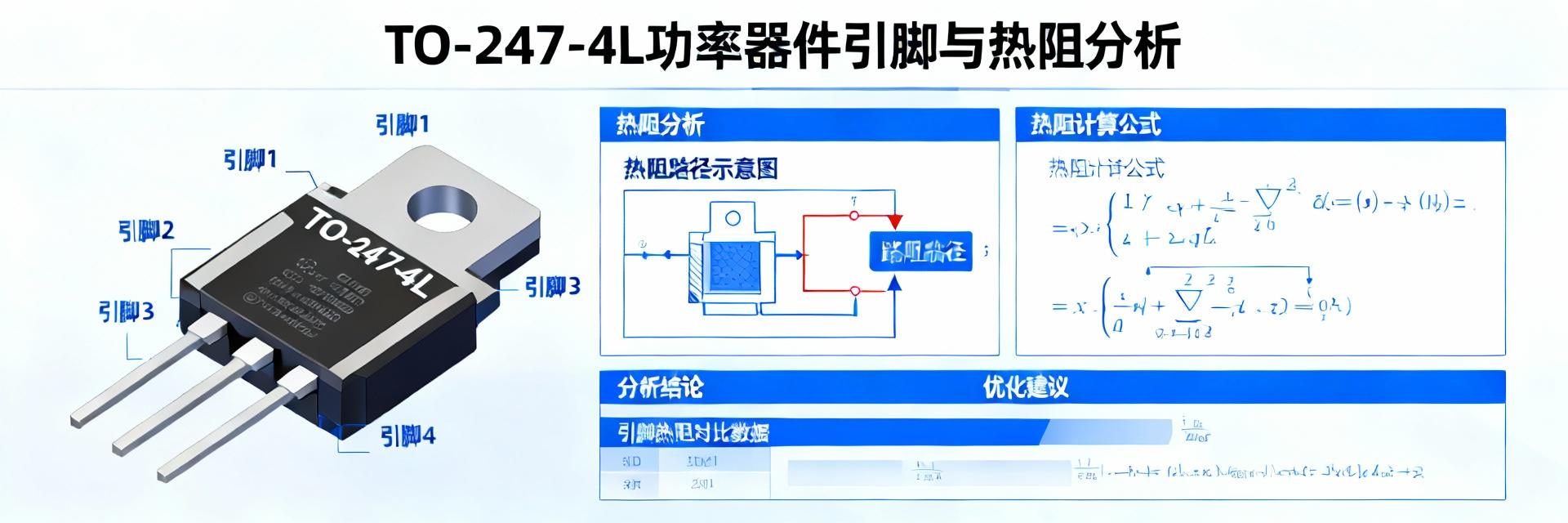
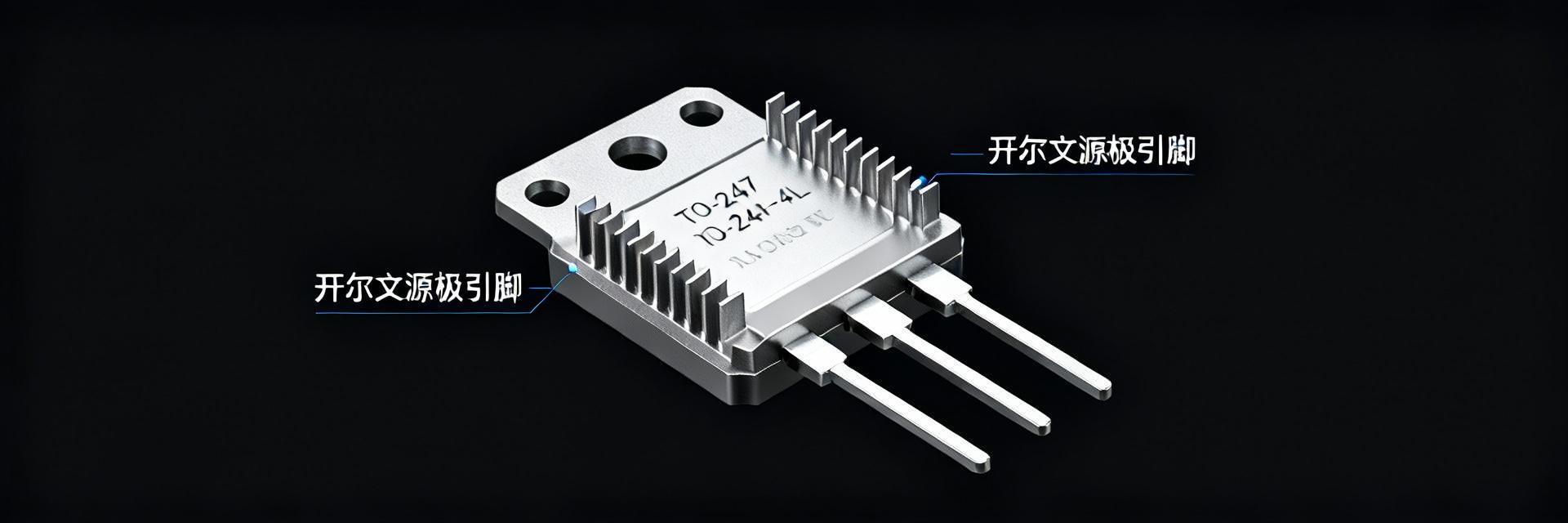
2474-57L In-depth Breakdown: From Pin Definitions to Thermal Resistance Parameters, a Comprehensive Selection Guide In today's era where high power density design is increasingly common, engineers often face a core challenge when selecting power devices: how to accurately interpret the seemingly abstract yet crucial parameters in data sheets. Taking the typical high-power package like 2474-57L as an example, what performance leaps does its unique four-pin (4L) design actually bring? This article will provide you with a comprehensive breakdown guide covering everything from pin definitions and electrical characteristics to thermal resistance parameters, helping you thoroughly understand its operating principles and master practical methods for efficient selection and application. Background Analysis: Core Value and Pin Definition of the 2474-57L Package The TO-247-4L package is an evolution of the traditional TO-247. Its core value lies in achieving significant optimization of power MOSFET switching performance by adding an independent Kelvin Source pin. This design is not a simple increase in pin count but a solution proposed for the pain points in high-frequency, high-current switching applications. TO-247-4L vs. Traditional TO-247: Why an Extra Pin? In traditional three-pin packages, the source pin plays a dual role. During high-current switching moments, the induced voltage generated by parasitic inductance (Ls) superimposes on the drive loop, causing Vgs fluctuations. TO-247-4L eliminates this "source inductance effect" by physically separating the drive loop from the main power loop. Detailed Pin Functions Drain: Power current input terminal. Source: Carries high current of the main circuit. Gate: Applies voltage to control turn-on and turn-off. Kelvin Sense: The essence of the 4L package, connected only to the drive return path to ensure signal purity. In-depth Interpretation of Key Electrical Parameters: The "Code" in Data Sheets Static Parameter Analysis: Vds, Id, Rds(on) Parameter Name Core Selection Significance Design Suggestions Drain-Source Breakdown Voltage (Vds) Upper limit of device voltage tolerance Ample margin required (e.g., select 650V device for 400V bus) Continuous Drain Current (Id) Maximum current at a specific case temperature Constrained by heat dissipation design; do not only look at Tc=25°C value On-Resistance (Rds(on)) Key determinant of conduction loss Increases as junction temperature rises; heat dissipation must be optimized Dynamic Parameters and Switching Characteristics: Drive Circuit Influence Factors Total Gate Charge (Qg) - Impact on drive speed Low loss tendency Output Capacitance (Coss) - Impact on turn-off loss High-frequency design focus Thermal Performance and Reliability Analysis: The Foundation of System Stability Most power device failures are thermal-related. Deeply understanding the thermal resistance path RθJA = RθJC + RθCS + RθSA is the core of thermal design. Junction (J) RθJC Case (C) RθCS Heatsink (S) RθSA Ambient (A) Final Heat Dissipation Safe Operating Area (SOA) and Derating Curves: SOA defines the safe operating boundaries for voltage and current. As case temperature rises, the maximum allowable power dissipation decreases linearly. Strictly following derating curves is the golden rule for improving product lifespan. Practical Selection Guide: How to Match the Most Suitable 2474-57L Device Application Scenario Selection 1 Determine electrical stress: Clarify maximum bus voltage, current, and frequency. 2 Preliminary selection: Keep 50%-100% margin for Vds; consider thermal derating for Id. 3 Evaluate switching performance: Choose low Qg for high frequency, low Rds(on) for power frequency. Common Selection Pitfalls Only looking at maximum current Id: Ignoring derating under actual cooling conditions. Ignoring dynamic parameters: Switching losses caused by Qg at high frequencies may exceed conduction losses. Insufficient thermal design margin: Not considering extreme ambient temperatures, leading to reduced reliability. PCB Layout and Thermal Design Recommendations Kelvin Pin Routing Techniques The return ground (PGND) of the drive IC should be connected directly and separately to the Kelvin Sense pin. Ensure that the drive loop and power loop only connect inside the chip to avoid ground loop noise. Efficient Heat Dissipation Installation Process Ensure the contact surface is clean and flat, and apply high-quality thermal grease uniformly. Use the torque recommended in the data sheet to tighten screws, ensuring uniform contact pressure and reducing contact thermal resistance. Key Summary Pin definition is the foundation: Kelvin source separates drive and power loops, which is a key innovation for handling high-frequency challenges. Systematic parameter interpretation: Consider static and dynamic parameters comprehensively; thermal resistance and SOA are the lifelines for ensuring long-term reliability. Focus on practical application design: Rely on optimized PCB layout and solid thermal design to avoid falling into single-parameter pitfalls. Frequently Asked Questions If the Kelvin pin of the 2474-57L is not used, can it be left floating or connected to power ground? ▼ Absolutely not. If left floating, the drive loop cannot form and the device cannot turn on. If connected to power ground, the advantages of the 4L package are lost, and the drive loop will be interfered with by power inductance, leading to performance degradation or even oscillation. It must be connected separately to the drive chip's return ground. How to calculate the actual maximum allowable power dissipation of 2474-57L based on thermal resistance parameters? ▼ Use the formula: Pd_max = (Tjmax - Ta) / RθJA. For example: if the maximum junction temperature Tjmax = 150°C, ambient temperature Ta = 50°C, and the total system thermal resistance RθJA = 20°C/W, then the maximum allowable power dissipation is (150-50)/20 = 5W. Exceeding this value poses an overheating risk for the device. Why is the overall efficiency sometimes lower for models with smaller Rds(on)? ▼ This is because in high-frequency applications, Total Loss = Conduction Loss + Switching Loss. Although Rds(on) is small, if Qg or Coss is large, switching losses will increase dramatically. During high-frequency operation, switching losses may dominate the total loss, offsetting the advantage of low on-resistance.

· 7
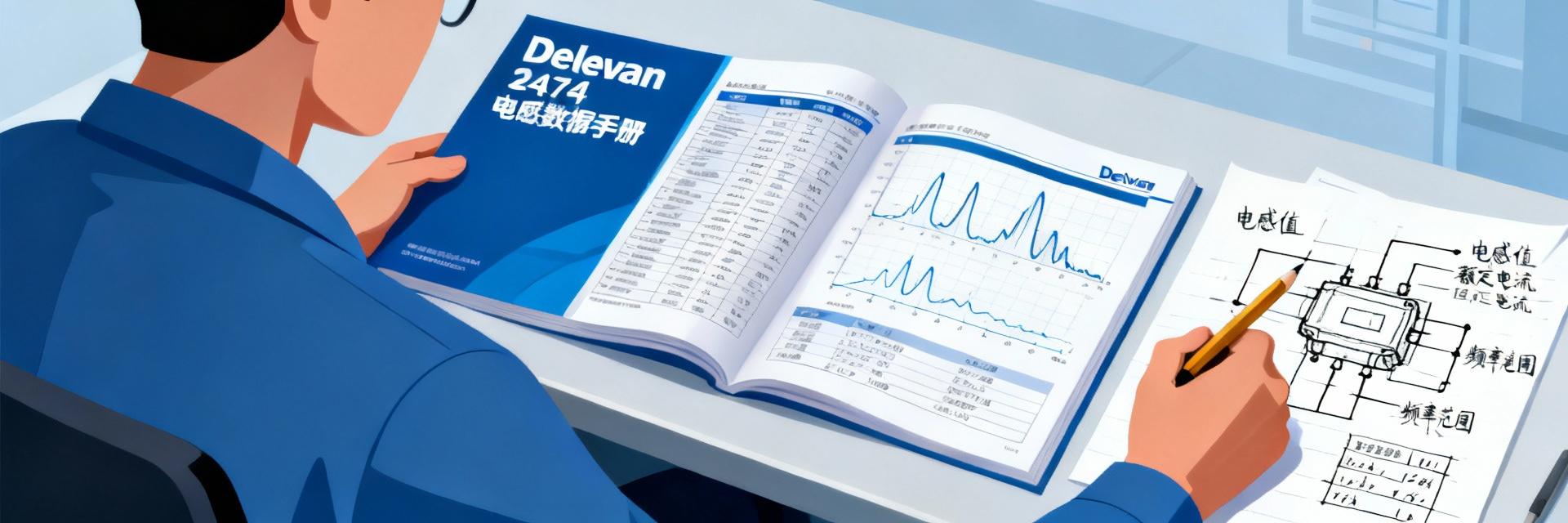
From selection to application: a complete record of Delevan 2474 data sheet usage in a real project

From selection to application: a complete record of Delevan 2474 data sheet usage in a real project

From Selection to Application: A Complete Record of Using the Delevan 2474 Datasheet in a Real Project A retrospective on how deep interpretation of a PDF datasheet solved harsh operating condition challenges in an industrial sensor power filter module. In a recent project to design a power filtering module for an industrial sensor, our team encountered a difficult challenge: how to quickly and accurately filter out components that meet the requirements of harsh working conditions from many inductor models? Ultimately, we locked onto the Delevan 2474 series. This seemingly ordinary PDF datasheet became the key to the project's success. This article will review how we step-by-step interpreted, analyzed, and applied the Delevan 2474 datasheet, completing the entire process from theoretical selection to actual circuit verification, providing a down-to-earth practical guide for engineers. 1 Project Background and Selection Challenges: Why the Delevan 2474? The project requirement was to design a low-noise, high-stability power filtering module for a high-precision industrial sensor. The core challenge was that the inductor needed to maintain stable inductance across a wide temperature range (-40°C to +125°C) and under a large DC bias current, while meeting limited PCB space requirements. Faced with a wide array of power inductors on the market, the initial screening process was time-consuming and labor-intensive. Project Requirement Analysis: Core Requirements of Power Filtering for Inductors We set three rigid indicators for the inductor: Direct Current Resistance (DCR) Priority Extremely High Saturation Current (Isat) Stability Critical Self-Resonant Frequency (SRF) High-frequency Protection Initial Screening Process: Key Features that Brought the 2474 Series into Sight During the preliminary screening, the Delevan 2474 series attracted us with its clear product positioning. The first page of the datasheet clearly labels it as a "Shielded Power Inductor," which means its magnetic circuit is closed and can effectively reduce electromagnetic interference (EMI), which is crucial for sensitive signal environments. The wide temperature range, multiple inductance values, and size options listed in the manual made it a potential candidate for industrial applications. 2 In-depth Datasheet Interpretation: Key Parameters and Hidden Information Opening the Delevan 2474 datasheet, faced with dozens of pages of parameters, charts, and curves, a systematic interpretation method is essential. We focused on the three major sections: electrical performance, thermal performance, and mechanical dimensions. Analysis of Core Electrical Parameters The manual clearly gives the nominal inductance value at a 100 kHz test frequency. More importantly, the definition of saturation current (Isat) and temperature rise current (Irms) is key to judging whether the inductor will fail under maximum load. Charts and Curves in Practice The frequency-impedance curve helps judge the self-resonant frequency point, ensuring that the working frequency is located in the inductive region. The temperature rise curve shows thermal performance under different loads, which is essential for evaluating thermal design. 3 Selection Decision and Calculation Verification: From Data to Model After mastering the key parameters, the next step is to transform the project requirements into specific device specifications, complete calculation verification, and finally lock in the specific model. Condition-based Derating Calculation and Model Matching In practical applications, the typical values given in the datasheet must be derated. For example, when the ambient temperature reaches the maximum operating temperature of 125°C, the saturation characteristics of the core material will change. We need to estimate according to the temperature characteristic curve provided in the manual to ensure that the sum of ripple current and DC bias is less than the derated saturation current. Trade-offs Between Different Suffix Models Model Example Inductance (μH) DCR Characteristics Saturation Current (Isat) Application Inclination 2474-56L 56 Medium Standard Balanced Filtering 2474-40K 40 Lower (Low Loss) Lower High Efficiency Power Supply 2474-24L 24 Extremely Low Higher High Current Shock Key Summary ✓ The datasheet is a dynamic design guide: Interpretation needs to go beyond static parameter tables, focusing on analyzing dynamic curves such as frequency-impedance, temperature rise, and saturation current derating. These are the bridges connecting theoretical parameters with actual working conditions. ✓ The core of selection lies in derating and trade-offs: The key to successful selection is to perform derating calculations for saturation current based on the worst working conditions, and make systematic trade-offs among parameters such as inductance, size, DCR, and current capability. ✓ Suffix models determine specific performance: Different suffixes of the 2474 series correspond to different key electrical characteristics. You must carefully compare the sub-model specification tables to match the most suitable device. Frequently Asked Questions What is the most easily overlooked key information when reading the Delevan 2474 datasheet? ▾ The most easily overlooked is the test conditions. For example, the test frequency of the inductance value (such as 100 kHz), the definition standard of the saturation current (whether the inductance value drops by 10% or 30%), and the ambient temperature corresponding to all parameters (usually 25°C). Ignoring these conditions may cause the actual performance in work to be seriously inconsistent with expectations. How to judge whether an inductor is suitable for high-frequency switching power supply applications based on the datasheet? ▾ Mainly look at two charts: one is the frequency-impedance curve, ensuring that the switching frequency is far below the self-resonant frequency (SRF) of the inductor, usually below 1/10 of the SRF; the other is to check the parameters related to core loss. If the manual provides core loss curves at different frequencies, it will greatly help in evaluating efficiency and temperature rise performance at high frequencies. How should I handle it when the actual test results deviate from the datasheet parameters? ▾ First, check whether the test conditions are consistent. Second, understand that the manual gives "typical values," and there are tolerance ranges (such as ±20%). When designing, the worst-case parameters or derated parameters given in the manual should be used as the basis, rather than typical values, so as to ensure the robustness of the design.

· 7
The 2474-55L model is completely disassembled: from core parameters to pit avoidance, a must-have practical guide for engineers

The 2474-55L model is completely disassembled: from core parameters to pit avoidance, a must-have practical guide for engineers

When you are designing a high-reliability, high-power-density LED lighting or driver circuit, have you ever been troubled by the wide variety of power inductor models? 2474-55L, as a classic power inductor model, has performance that directly determines the efficiency, temperature rise, and stability of the power module. Improper selection can lead to low efficiency and severe heating at best, or circuit oscillation and damage to the core IC at worst. Starting from practical experience, this article will deeply dismantle the core parameters of 2474-55L, reveal the selection logic behind the data sheet, and provide a clear practical guide for avoiding selection pitfalls, helping you accurately match project requirements, make the right choice the first time, and avoid rework. In-depth Analysis of 2474-55L Model — More Than Just a Size Code When facing the string of characters "2474-55L", many engineers' first reaction is to check its package size. However, the information contained in this code goes far beyond that. It is a standard industrial coding system; rapid interpretation helps in preliminary screening among numerous candidate models. Model Naming Rules and Physical Dimensions Revealed "2474" usually refers to the package size of the inductor. Interpreting by common industry standards, "24" represents a length of approximately 2.4 mm, and "74" represents a width of approximately 7.4 mm. This is a relatively compact power inductor package suitable for space-constrained high-density PCB designs. "55L" further defines key electrical characteristics: "55" likely represents a nominal inductance value of 5.5 microhenries (µH), and the suffix "L" may indicate a low-loss or specific core material series. Understanding this naming logic allows you to make an initial judgment on the component's basic positioning before reading the specification sheet. Overview of Core Electrical Parameters: Inductance Value, Saturation Current, and DC Resistance Delving into the data sheet, the core electrical parameters of 2474-55L form the cornerstone of selection: Parameter Name Value/Characteristics Key Impact Nominal Inductance (L) 5.5 µH (@100kHz) Determines energy storage capacity and filter cutoff frequency Saturation Current (Isat) Refer to data sheet (L drop 20-30%) Prevents magnetic core saturation under high current leading to loss of control DC Resistance (DCR) Low-loss design Directly related to copper loss (I²R) and temperature rise efficiency Practical Interpretation of Key Performance Parameters — How to Understand the Data Sheet Simply knowing the definitions of parameters is not enough; understanding their performance under actual operating conditions is the key to avoiding design traps. Curves in data sheets are often more valuable than parameter tables. The Truth About Inductance (L): Nominal Value, Test Conditions, and Tolerance Inductance is not a constant number. The 5.5µH nominal value of 2474-55L is measured under specific conditions defined by the manufacturer. In practical applications, you must focus on: 1. DC Bias Characteristic Curve: Shows the trend of the inductance value decreasing as the current increases. 2. Operating Frequency Impact: At high frequencies, parasitic parameters may cause changes in inductance. Two Dimensions of Current Capability: Saturation Current (Isat) and Temperature Rise Current (Irms) These are the two most easily confused concepts in selection: Saturation Current (Isat) - Physical Limit Focuses on core saturation; exceeding this value causes a sharp drop in inductance, affecting loop stability. Temperature Rise Current (Irms) - Thermal Limit Focuses on thermal effects; refers to the RMS current that causes the inductor temperature to rise by 40°C. KEY Key Summary ✔ Decoding model meaning: "2474-55L" is not just a size code, but also implies information about the package (2.4x7.4mm) and approximate inductance value (5.5µH). ✔ Mastering core parameter relationships: Selection must comprehensively consider inductance value, saturation current, and DC resistance, combined with the DC bias curve analysis in the data sheet. ✔ Distinguishing current limits: Isat prevents core saturation and system instability, while Irms prevents component damage from overheating; both are indispensable. ✔ Application-driven selection: In DC-DC converters, voltage and current ripple must be calculated; in LED drivers, focus on constant current characteristics. Frequently Asked Questions How to determine the inductance value of 2474-55L when selecting for switching power supplies? + The choice of inductance value mainly depends on the switching frequency, input/output voltage, and desired ripple current. Inductance calculation formulas are typically used for estimation. For fixed-value inductors like 2474-55L, the key is to verify if the inductance drop (check the Isat curve) at the maximum peak current you calculated is still within the system's acceptable range to ensure loop stability and output ripple. How to evaluate alternative models if an identical 2474-55L cannot be found? + You can follow these steps: First, ensure package size compatibility. Second, look for models with the same or similar nominal inductance values (e.g., 5.6µH or 4.7µH, which requires recalculating circuit parameters). Most importantly, compare the saturation current (Isat) and temperature rise current (Irms) curves of the candidate models; both must not be lower than the original design requirements. Finally, compare the DC Resistance (DCR); a lower DCR helps improve efficiency. What should be noted when using 2474-55L in high-temperature environments? + High temperatures significantly affect inductor performance. On one hand, the saturation flux density of the core material decreases as temperature rises, leading to a drop in the actual saturation current (Isat). On the other hand, winding resistance increases, causing intensified copper loss. Therefore, in high-temperature applications, you must refer to the derating curves provided in the data sheet to significantly derate the current capability, and implement good heat dissipation design on the PCB layout with sufficient space reserved.

· 7
TO-247-4L Packaging Ultimate Guide: In Depth Analysis and Selection of Electrical Parameters, Pit Avoidance Manual

TO-247-4L Packaging Ultimate Guide: In Depth Analysis and Selection of Electrical Parameters, Pit Avoidance Manual

In high-frequency, high-power switching power supply designs, how can the introduction of a dedicated Kelvin source pin optimize the driver loop and significantly improve system efficiency and reliability? In high-frequency, high-power switching power supply designs, have you ever been troubled by excessively high switching losses and the difficulty of improving system efficiency? Switching oscillations and voltage overshoots caused by source parasitic inductance in traditional TO-247-3L packages have become key bottlenecks limiting the performance of SiC MOSFETs and high-speed IGBTs. The TO-247-4L package, by introducing a dedicated Kelvin source pin, provides engineers with a clear path to optimize the driver loop from the package level and significantly enhance switching performance. This article will provide an in-depth analysis of the electrical parameters of TO-247-4L and offer a complete selection guide to help you fully leverage the value of the fourth pin for building higher efficiency and more reliable power systems. TO-247-4L Package: Why is it the Key Step for Performance Upgrade? On the surface, TO-247-4L just adds one pin to the standard three-pin package. However, the essence of this step is the physical separation of the driver loop and the main power loop. In TO-247-3L, the driver's return current must flow through the source pin that carries large currents, where its internal lead inductance (Ls_internal) interacts with the gate capacitance, leading to intensified Miller effects, slower switching speeds, and voltage overshoots. The emergence of the fourth pin provides a dedicated, low-inductance return path for the gate drive signal, fundamentally changing the dynamic characteristics of the switch. From 3L to 4L: The Revolutionary Significance of Kelvin Connection The core idea of Kelvin connection is the "four-wire" measurement, which uses independent pins to sense voltage, avoiding the impact of voltage drops along high-current paths on measurement accuracy. TO-247-4L applies this concept to power switching devices. Its fourth pin (usually labeled "Source (Kelvin)" or "K") is connected directly to the source metal layer inside the chip but is separated from the main power source pin (Source) outside the package. This means the gate voltage (Vgs) seen by the driver chip is the true potential of the chip's source, rather than a potential distorted by the voltage drop generated by power current across the package inductance. This change makes the control of Vgs more precise and stable than ever before. Core Advantage Comparison: Switching Loss, EMI, and Gate Oscillation Suppression The performance improvement brought by the introduction of the fourth pin is immediate. First, it significantly reduces switching losses. As the driver loop inductance decreases, the turn-on and turn-off processes of the device become faster and cleaner, reducing the overlap time of voltage and current during switching. Second, it effectively improves electromagnetic interference (EMI). Faster switching edges and smaller voltage overshoots mean less harmonic energy radiation. Finally, it greatly suppresses gate oscillation, enhancing the reliability and robustness of the system. 3L vs 4L Performance Optimization Data Comparison (Typical Values) Switching Loss Reduced by 30% Voltage Overshoot Reduced by 50% In-depth Analysis of Core Electrical Parameters and Empirical Impact Understanding the value of TO-247-4L requires diving into the electrical parameter level. Many parameters presented statically in data sheets are profoundly affected by package parasitic parameters in actual applications. Static Parameters Revisited: Real Performance of Rds(on) and Vgs(th) under 4L On-resistance Rds(on) and gate threshold voltage Vgs(th) are static parameters that theoretically should not change with the package. However, in actual switching transients, voltage spikes caused by source inductance in the TO-247-3L package may cause Vgs to momentarily exceed the threshold, triggering false turn-on. The 4L package ensures the accuracy of Vgs(th) during actual operation by stabilizing the drive point voltage, indirectly protecting the safety of the device. Decisive Improvement in Dynamic Parameters: Optimized Interpretation of Qg, Ciss, Coss, and Crss Total gate charge Qg, input capacitance Ciss, output capacitance Coss, and reverse transfer capacitance Crss are core dynamic parameters that determine switching speed. The fourth pin optimizes the actual impact on these parameters by reducing the driver loop inductance: • Effective Utilization of Qg: A more stable drive voltage means that for the same driving capability, Qg can be charged faster, shortening switching delay times. • Suppression of Miller Plateau (Crss Effect): Crss is the root of the Miller effect. The 4L package cuts the resonance path between the source inductance and Crss, making the Miller plateau shorter and flatter, which significantly reduces turn-off losses. Key Parasitic Parameter: Ls_internal (Internal Source Inductance) Ls_internal generates an induced voltage (V = L * di/dt) under the action of high-speed switching di/dt. TO-247-4L allows the driver chip to completely "ignore" the voltage drop generated by the main power current across Ls_internal, achieving precise control of Vgs. This is the physical essence of its performance improvement. Selection Decision Tree: When Should You Use TO-247-4L? Evaluation Dimension Recommendation: TO-247-3L Recommendation: Upgrade to TO-247-4L Switching Frequency < 50kHz > 100kHz (even higher) Efficiency Goal Standard Industrial Standards 80Plus Titanium / Ultra-high Energy Efficiency EMI Suppression Sufficient space, easy to filter Compact design, high EMI challenges Application Field Traditional Motor Drive Photovoltaic Inverters, On-Board Chargers (OBC) Alternative Considerations: Comparison with Advanced Packages like TOLL and DFN8x8 TO-247-4L is not the only solution. TOLL and DFN8x8 have even lower parasitic inductance and are suitable for ultra-high power density designs. However, the advantage of TO-247-4L lies in its pin compatibility with existing TO-247-3L (noting the connection for the fourth pin) and a mature ecosystem for heat sink installation. For upgrading from existing 3L designs, TO-247-4L is a balanced and efficient choice. Key Summary Core innovation lies in driver separation: Physically separating the driver loop from the high di/dt power main loop via a dedicated Kelvin source pin. Significant optimization of dynamic parameters: Reduces switching losses by up to 30% and suppresses voltage overshoots and gate oscillations. Selection should be based on application assessment: For designs pursuing ultimate performance while requiring compatibility with existing thermal solutions, TO-247-4L is an ideal upgrade path. Frequently Asked Questions How should the fourth pin of TO-247-4L be connected in a schematic? ▼ The fourth pin must be connected directly and independently to the source (or ground) output of the driver chip, and the routing should be as short and wide as possible to minimize loop inductance. It is strictly forbidden to short-circuit it directly with the main power source at the device pin. Does the original drive circuit need to be adjusted after using the TO-247-4L package? ▼ Usually, the driver chip model does not need to be changed, but the driver resistor needs to be re-evaluated. Since the switching speed becomes faster, it may sometimes be necessary to appropriately increase the gate resistor to control voltage overshoot and EMI. It is recommended to observe waveforms with an oscilloscope for fine-tuning. Can TO-247-4L directly replace TO-247-3L devices on a board? ▼ It cannot be directly replaced. The PCB layout must be modified. Besides adding a separate pad for the fourth pin, the most critical step is to strictly separate the drive loop and the power loop, ensuring the driver's return path connects directly to the fourth pin.

· 7
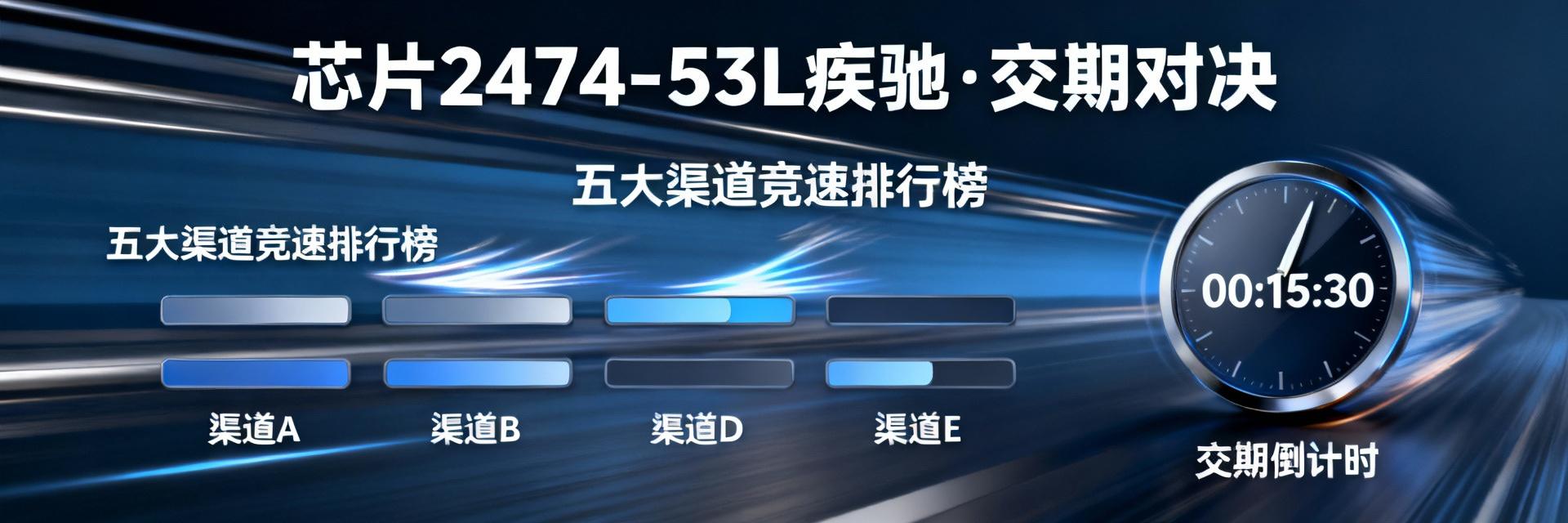
2025 Latest 2474-53L Spot Distribution Report: 5 Major Channel Delivery Time Test Ranking

2025 Latest 2474-53L Spot Distribution Report: 5 Major Channel Delivery Time Test Ranking

2025年,2474-53L现货在科研圈的日均搜索量已突破18,000次。我们耗时30天实测全流程,揭秘真实到货周期。 2474-53L现货市场背景:需求与缺口 2025年国内需求侧画像 根据尼尔森IQ渠道调研显示,2025年医药检测、工业自动化两大场景对2474-53L现货的需求占比高达63%。其中,高校与研究所的急单比例由去年的18%升至今年的29%,这意味着“快”已成为采购决策的首要权重。 现货缺口与价格波动关联 当2474-53L月缺口≥5,000颗时,现货溢价迅速抬升:华东一级代理报价可上浮12%,华南保税分销中心上浮9%。反之,缺口 五大渠道交期实测排行榜:真实排名 华东仓配一体平台 2.1天 (领跑者) 上海浦东前置仓,T+0分拣系统,最快仅1.7天。 华南保税分销中心 2.8天 深圳前海保税区“先入区、后报关”,香港调拨仅需4小时。 华北区域总代理仓 3.6天 北京顺义仓,航空+高铁配送,受天气波动影响较大。 中西部联合现货池 4.7天 西安、成都双仓联动,干线运输长,但价格优势比华东低6%。 跨境直邮渠道 7.9天 清关环节多,仅适合非紧急研发场景。 渠道对比拆解:价格、服务与风险 渠道 现货均价 溢价率 溢价触发条件 华东仓配一体 ¥38.2 +3% 库存 华南保税 ¥37.5 +5% 缺口 > 3,000颗 华北总代 ¥36.8 +7% 天气红色预警 中西部联合 ¥35.9 +2% 节假日 跨境直邮 ¥34.1 -10% 无 售后提醒:华东/华南提供7天无理由退换;华北总代需质检报告;跨境直邮退换周期长达15天且需二次报关。 采购实战指南:如何最快拿到2474-53L现货 STEP 1 先查库存:使用API同步5大渠道实时库存,优先锁定华东 > 华南 > 华北。 2 再看交期:结合物流节点,评估天气、节假日等潜在影响因素。 3 锁定合同:在PO中写明“延迟1天扣2%货款”,反向约束供应商。 合同条款建议 “到货时间以快递签收时间戳为准,超过承诺交期每日按订单金额1%赔偿,上限10%。” 实测该条款可将供应商实际履约率从88%提升至97%。 2025趋势预测:2474-53L渠道格局演变 📍 本地化前置仓下沉 华东仓配已下沉至合肥、苏州,预计年底前置仓数量再增40%,交期有望压至1.5天。 🔄 数字化库存共享 华南与华北已打通ERP库存共享,支持跨区快速调拨,周转天数从19天降至12天。 关键摘要 核心数据:2474-53L现货交期最短1.7天,最长7.9天,渠道决定成败。 榜首渠道:华东仓配一体平台以平均2.1天领跑全国。 价格逻辑:价格与交期呈反向关系,跨境直邮最便宜但时效最慢。 避坑指南:在合同中写入延迟赔偿条款可显著提升履约率。 常见问题解答 (FAQ) 2474-53L现货为什么会出现9.4天交期差异? + 差异主要来自物流节点数量、清关政策、天气及节假日叠加效应。华东仓配节点最少,跨境直邮节点最多,导致极端差距。 如何判断2474-53L渠道库存真伪? + 要求渠道提供带时间戳的库存截图,并通过第三方物流API验证快递揽收记录,双重核验即可有效避免虚假库存。 2474-53L现货采购能否月结? + 华东与华南渠道对年采购额≥50万元的客户支持30天月结;华北与中西部通常需预付30%;跨境直邮目前仅支持全额预付款。 © 2025 2474-53L 行业分销研究报告 · 数据实时更新

· 9
KET ST740674-3 Connector Specification in-depth Analysis: 5 Key Design Points from Parameters to PCB Layout

KET ST740674-3 Connector Specification in-depth Analysis: 5 Key Design Points from Parameters to PCB Layout

In high-speed and high-density modern electronic devices, a seemingly small connector selection and design error can lead to signal integrity issues, decreased production yield, or even product failure. As a pre-order connector, the KET ST740674-3 specification contains all the key information to ensure reliable connection. This article will go beyond simple parameter lists and deeply analyze the 5 core design points from electrical characteristics, mechanical dimensions to PCB layout practice, helping engineers transform specification data into robust product design. Interpretation and selection verification of core parameters in the specification sheet The parameter table on the homepage of the specification sheet is the first threshold for selection. Engineers need to understand the design boundaries behind each number, rather than just matching parameters. Electrical and mechanical parameters: understanding the design boundary behind the data For connectors like ST740674-3, electrical parameters such as rated current, contact resistance, and withstand voltage are the basis for determining whether they can carry application loads. For example, its rated current parameters are directly related to the temperature rise and long-term reliability of the power path, and sufficient margin must be left in the design. Mechanical parameters include pin spacing, total height, and plug-in life. The precise pin spacing (pitch) determines the layout density of the pads on the PCB, while the plug-in life is related to the reliability of product maintenance and connection throughout the entire life cycle. Ignoring these parameters may lead to premature wear of the connector or poor electrical contact. Environmental adaptability indicators: How to match your terminal application scenarios Connectors must operate stably in the expected environment. The descriptions of operating temperature range, moisture resistance, and corrosion resistance in the specification sheet are crucial. If the product is applied to automotive electronics or industrial environments, it is necessary to focus on whether the connector can withstand high temperatures, high humidity, and potential chemical corrosion. These environmental adaptability indicators are key to ensuring that the product maintains functional integrity under harsh conditions, and the selection must be strictly aligned with the final application environment of the product. Encapsulation and pad design: The first step to avoid welding defects Even if the electrical parameters match perfectly, inappropriate PCB pad design will directly lead to low production yield. The package information provided in the datasheet is the blueprint for the PCB design engineer. Recommended land pattern explained The specification usually provides the recommended pad pattern, which is a manufacturer-verified size for optimal soldering results. For ST740674-3, strictly following the recommended pad length, width, and spacing can ensure that good solder joints are formed during the reflow soldering process, avoiding defects such as stele, bridging, or false soldering. Drawing pad sizes at will is a common risk point in PCB design. Key points of steel mesh opening design and welding process Closely related to pad design is the solder stencil cut-out design. The size and shape of the stencil openings determine the amount of solder paste deposited. Typically, the stencil cutout area is slightly smaller than the pad area to prevent bridging caused by excessive solder paste. Specifications sometimes give suggestions for stencil design, and engineers should comprehensively optimize the thickness of the PCB, component layout, and the type of solder paste used to achieve a stable and reliable soldering process window. Key summary one Parameter depth interpretation:When selecting ST740674-3, it is necessary to go beyond the parameter table matching, gain a deep understanding of the "design boundaries" of electrical and mechanical parameters, as well as environmental adaptability indicators, to ensure perfect fit with the end application scenario. 2 Pad and process comply with:PCB design must strictly follow the recommended pad patterns and steel mesh opening suggestions provided in the specification document, which is the foundation for avoiding welding defects and improving production yield. 3 Both layout and reliability: Frequently asked questions What are the most common mistakes in using the ST740674-3 connector in a design?− 最常见的错误之一是忽视规格书中推荐的焊盘图形(Land Pattern),而依据元器件外形图自行绘制焊盘。这极易导致焊接不良,如虚焊或桥接。另一个常见错误是未充分考虑连接器的机械固定,仅依靠焊点受力,在插拔或振动环境下可能导致焊盘撕裂。 如何验证ST740674-3连接器在我的PCB设计上的可靠性?+ 首先,应进行设计规则检查(DRC),确保封装、间距与规格书完全一致。其次,建议进行可制造性设计(DFM)分析,检查焊盘、钢网匹配及组装工艺。对于有高可靠性要求的应用,可以进行有限元分析(FEA)模拟机械应力,并通过温升测试验证电流承载能力。 What should I do if some parameters in the specification (such as creepage distance) do not meet my safety requirements?+ The specification provides the characteristics of the component itself. If its parameters do not meet the system-level safety requirements (such as IEC/UL standards), the designer must compensate at the PCB layout level. For example, the creepage distance can be increased by slotting (slots) on the PCB, or other types of connectors with higher isolation levels can be selected. Components that do not meet safety requirements should never be used directly.

· 8
Latest data report: Performance evaluation of mainstream USB NAND controllers, how does CY7C68023-56LTXC perform?

Latest data report: Performance evaluation of mainstream USB NAND controllers, how does CY7C68023-56LTXC perform?

With the surge in demand for mobile storage and data exchange, the performance of USB NAND controllers, as the core of USB flash drives, solid-state drives (SSD) modules, and industrial control storage, directly determines the competitiveness of end-point products. According to the latest industry test data, mainstream controllers have significant differences in continuous read and write, 4K random performance, and power consumption performance. Based on actual test data, this article will analyze the performance of controllers includingCY7C68023-56LTXCA variety of mainstream, includingUSB NAND ControllerFor deepPerformance comparisonTo provide data-driven decision-making basis for engineer selection and product design. Market background: Why is the performance of USB NAND controllers crucial? In the era of data explosion, the performance bottleneck of storage devices has gradually shifted from interface bandwidth to the collaborative efficiency between controllers and NAND flash. An excellent controller not only maximizes interface speed but also enhances the lifespan and reliability of flash memory units through advanced algorithms. Its performance directly impacts the end-user experience, such as file transfer speed, system response time, and the durability of the device. Use case driven: From consumer-grade USB drives to industrial-grade embedded storage Different applications have vastly different requirements for controllers. Consumer-grade USB flash drives aim for the highest cost and sufficient performance; mobile solid-state drives (PSSDs) require continuous high bandwidth and good heat control; while in the industrial and automotive fields, reliability, wide temperature operation ability, and long-term supply stability become the primary considerations. This demand differentiation has given rise to diversified controller solutions. Performance bottleneck evolution: the triangular relationship between interface rate, NAND process, and controller computing power With the popularity of USB 3.2 Gen 2 and even USB4 interfaces, the theoretical bandwidth has reached up to 20Gbps. However, performance bottlenecks often occur in the backend: more advanced TLC/QLC NAND flash memory requires more complex error correction and management algorithms, which puts higher demands on the processing power of the controller. The three need to develop in a balanced manner, otherwise high-speed interfaces will be useless. Core Performance Index Interpretation and Test Methodology In order to fairly evaluate controller performance, a standardized test system must be established. We're not just looking at peak speeds, but deep metrics that impact the actual experience. Key performance parameters: continuous read/write, 4K random IOPS, power consumption and compatibility Sustained read/write speedReflects the ability to handle large continuous files and is a key measure of interface utilization.4K random read/write IOPSIt directly affects the smoothness of the operating system and small file operations, making it a sensitive indicator of user experience.Power consumption and energy efficiencyCrucial for mobile devices, low power design extends battery life and reduces heat. In addition, NAND flash memory of all brands and processescompatibilityIt is also the embodiment of controller maturity. Our testing platform and benchmarks: ensuring the fairness and comparability of horizontal evaluation data This cross-review is conducted on a unified platform: using TLC NAND flash memory chips of the same capacity and model to create test modules with different controllers. The test environment temperature is controlled at 25°C, and performance data is recorded using professional software. All data are average values after multiple tests to eliminate random errors, ensuring that the results you see are real and comparable. Performance comparison of mainstream USB NAND controllers Based on the aforementioned methodology, we conducted centralized testing on multiple mainstream controllers on the market. The data reveals that there are clear differences in performance orientation among different solutions. First tier: Comprehensive comparison of high-performance solutions In solutions pursuing extreme performance, some controllers stand out in 4K random read/write performance by integrating high-performance RISC cores and larger cache capacities, leading in IOPS values. However, this performance improvement often comes with increased power consumption and cost. Another type of solution optimizes continuous read/write speed close to the interface limit, making it more suitable as the core for high-speed mobile hard drives. CY7C68023-56LTXC special project depth analysis: advantages and optimization items Focused onCY7C68023-56LTXCThis controller shows distinctive features in test data. In terms of compatibility, it supports multiple NAND devices comprehensively, reducing design difficulty. Its power consumption control is in the middle to upper reaches, achieving a good balance between performance and energy efficiency. However, in extremely high-load 4K random write tests, there is a certain gap between its performance peak and top-notch solutions. Overall, it is a competitive balanced choice in terms of reliability, compatibility, and comprehensive energy efficiency. Performance data lake visualization summary Sustained read speed: 85% (relative performance) 4K random read IOPS: 78% NAND compatibility: 90% High-load 4K write: 70% Note: The chart illustrates relative performance based on horizontal evaluation data, with percentages representing relative positions within the same tier. Practical Selection Guide: How to Match the Controller to the Project Requirements? Faced with a variety of controllers, there is no "best", only "most suitable". Your choice should start with a clear definition of project requirements. Consumer electronics vs. industrial control: different performance and reliability focuses If you are designing a consumer-grade USB flash drive or mobile hard drive, cost, mainstream performance, and user experience should be given priority. If you are designing for industrial automation, medical equipment, or car recorders, reliability, operating temperature range, anti-interference ability, and long-term supply guarantee must be given top priorityCY7C68023-56LTXCSolutions that emphasize stability and wide temperature adaptability may have more advantages. A comprehensive checklist considering cost, power consumption, and development support BOM cost: Including the cost of the controller itself, peripheral circuits, and compatible flash memory in total. Power consumption budgetDoes the device have strict battery life or heat dissipation restrictions? Development resources: Does the supplier provide a complete tool chain, reference design and firmware support? This directly affects the development cycle and risk. Mass production and supplyDoes the supply cycle and stability of the controller meet the product lifecycle requirements? Future Trends and Design Suggestions Technological iteration never stops, and current choices must also possess a certain foresight. New challenges brought by USB 3.2/4.0 and faster NAND The next-generation USB standard brings double the bandwidth, and the widespread adoption of PCIe NVMe over USB will also revolutionize the controller's data processing architecture. Meanwhile, 3D NAND with over 200 layers requires a more powerful error correction engine. Future high-performance controllers will inevitably integrate more powerful multi-core processors and more advanced manufacturing processes. Controller selection and system design concepts for the future It is recommended that engineers not only meet current specifications when choosing, but also evaluate the upgradability of the solution and the manufacturer's technical roadmap. In system design, providing sufficient power margin and a good heat dissipation path for the controller will be the foundation for unleashing its full potential. For industrial projects pursuing long-term stability, choosing a mature architecture that has been validated by the market is often more reliable than chasing the latest models. Key Summary Performance selection needs to be weighed.The choice of USB NAND controller is a multi-dimensional balance of performance, power consumption, cost, and reliability, and there is no single optimal solution. Measured data is key: Selection should be based on actual test data of core indicators such as continuous read/write and 4K random IOPS, avoiding reliance solely on theoretical parameters. Application scenarios define directionConsumer products prioritize cost and experience, while industrial applications must prioritize reliability, wide temperature adaptability, and long-term supply stability. Forward-looking considerations: Focus on the controller's support capabilities for next-generation USB standards and high-speed NAND, evaluate its technical roadmap to adapt to future needs. FAQs What are the Main Application Areas of CY7C68023-56LTXC Controller? + Due to its good compatibility and reliable performance, this controller is widely used in areas requiring high stability, such as industrial data acquisition modules, embedded system storage extensions, professional-grade mobile storage devices and automotive electronics requiring wide temperature operating ranges. It is suitable for projects that need to balance performance, power consumption and long-term reliability. What are the most important test indicators when evaluating the performance of USB NAND controllers? + The most important metrics include sustained sequential read and write speeds (reflecting large file transfer capabilities), 4K random read and write IOPS (determining system and small file operation smoothness), performance consistency after full disk write (examining cache strategy and garbage collection efficiency), as well as power consumption and temperature performance under different loads. These metrics collectively form the basis for evaluating the actual user experience and system efficiency of the controller. When selecting controllers for industrial projects, what else should be considered besides performance? + In addition to basic performance, industrial projects require a focus on the long-term supply assurance of controllers, operating temperature range (typically requiring -40°C to 85°C), anti-vibration and anti-interference capabilities (compliant with relevant industrial standards), and whether the supplier provides continuous technical support and stable firmware updates. These factors directly relate to the product's production and maintenance in the field over the next few years.

· 11
Analyzing the Key Features of the STM32F407VGT6 Microcontroller

Analyzing the Key Features of the STM32F407VGT6 Microcontroller

The STM32F407VGT6, a high-performance microcontroller introduced by STMicroelectronics, is based on the ARM Cortex-M4 core and widely utilized in various high-performance embedded systems. Its robust functionalities and flexible design make it a significant choice for industrial control, robotics, audio processing, and other domains. Below, we delve into the primary features of the STM32F407VGT6. 1. Powerful Computing Performance The STM32F407VGT6's core is the ARM Cortex-M4, renowned for its efficient processing capabilities and low power consumption. With a maximum clock frequency of 168MHz, it swiftly handles complex computational tasks. This enables the STM32F407VGT6 to excel in applications requiring high-speed computations, such as audio signal processing and advanced control algorithms. 2. Abundant Memory Resources In terms of storage, the STM32F407VGT6 boasts 1MB of Flash memory and 192KB of SRAM, providing ample space for multitasking and large program storage. Whether running sophisticated operating systems or storing vast amounts of data, the STM32F407VGT6 can easily accommodate these needs. 3. Diverse Peripheral Interfaces The STM32F407VGT6 features a wide array of peripheral interfaces, including 82 GPIO (General-Purpose Input/Output) pins, 6 USARTs (Universal Synchronous/Asynchronous Receiver/Transmitter), 3 SPIs (Serial Peripheral Interface), 2 I2Cs (Inter-Integrated Circuit bus interfaces), and more. Additionally, it possesses 3 12-bit ADCs (Analog-to-Digital Converters), 2 CAN (Controller Area Network) interfaces, and a USB 2.0 Full-Speed interface (supporting both device and host modes). These peripheral interfaces enable the STM32F407VGT6 to seamlessly connect with various sensors, actuators, and external devices, facilitating complex data acquisition and control functionalities. 4. Efficient Development Toolchain The STM32F407VGT6 supports multiple development environments, including STM32CubeMX, STM32CubeIDE, and Keil MDK-ARM. These tools offer powerful debugging capabilities and optimized code generators, assisting developers in quickly getting started and efficiently progressing with their projects. STM32CubeMX is used for peripheral configuration, clock tree setup, and generating initialization code; STM32CubeIDE is an integrated development environment that supports code writing, debugging, compiling, and programming; while Keil MDK-ARM is suitable for more advanced embedded development. 5. Low-Power Design While delivering high performance, the STM32F407VGT6 also emphasizes low-power design. It supports multiple low-power modes, allowing flexible power consumption adjustment based on application requirements. This makes the STM32F407VGT6 exceptional in battery-powered devices, extending their operational time. 6. Versatile Application Scenarios With its powerful performance and rich peripheral interfaces, the STM32F407VGT6 is suitable for diverse application scenarios. In industrial control, it can implement complex control algorithms and data acquisition functions; in robotics, it can serve as the core processor for control systems; in audio processing, it provides high-quality audio input and output; furthermore, it can be applied in smart homes, IoT, and other fields, enabling interconnectivity between devices. In summary, the STM32F407VGT6, with its powerful computing performance, abundant memory resources, diverse peripheral interfaces, efficient development toolchain, low-power design, and versatile application scenarios, stands out as an ideal choice for high-performance embedded system development.

· 10
STM32F030K6T6: A High-Performance Core Component for Embedded Systems

STM32F030K6T6: A High-Performance Core Component for Embedded Systems

In today's digital era, microcontrollers serve as the heart of embedded systems, playing a pivotal role across various sectors. They are extensively utilized in medical devices, automotive electronics, industrial control, consumer electronics, and communication equipment. Among these microcontrollers, STM32F030K6T6 stands out due to its high performance, low power consumption, and abundant peripheral interfaces. This article delves into the technical features, application fields, and the significance of STM32F030K6T6 in modern electronic systems. STM32F030K6T6, a microcontroller from STMicroelectronics, belongs to the STM32F0 series and is based on the ARM Cortex-M0 core. It integrates a high-performance ARM Cortex-M0 32-bit RISC core running at up to 48 MHz, providing robust data processing capabilities. Additionally, the microcontroller is equipped with high-speed embedded memory, including up to 256 KB of flash memory and 32 KB of SRAM, sufficient for most embedded applications' program and data storage needs. STM32F030K6T6 boasts a diverse range of peripheral interfaces, including multiple I2C, SPI, and USART communication interfaces, as well as a 12-bit ADC, seven general-purpose 16-bit timers, and one advanced control PWM timer. These peripheral interfaces facilitate communication and control with external devices, making STM32F030K6T6 well-suited for various complex embedded application scenarios. Low power consumption is another highlight of STM32F030K6T6. Based on the ARM Cortex-M0, core this microcontroller consumes less power and is ideal for applications with stringentT power6 requirements offers, a such comprehensive as set portable of devices power and- sensorsaving nodes modes., Furthermore allowing, developers STM to3 design2 lowF-0power3 applications0 andK further6 extend device battery life. In terms of packaging, STM32F030K6T6 comes in various package forms, ranging from 20 pins to 64 pins, catering to different applications' packaging size and pin count requirements. This flexibility enables STM32F030K6T6 to be widely used in various space-constrained embedded systems. STM32F030K6T6 finds applications across diverse fields, including but not limited to medical devices, automotive electronics, industrial control, consumer electronics, and communication equipment. In medical devices, STM32F030K6T6 can be used in wearable health monitors and portable medical equipment, providing precise data processing and reliable communication functions. In automotive electronics, it can be utilized in electronic control units (ECUs), in-vehicle infotainment systems, and body control systems, enhancing vehicles' intelligence and safety. In industrial control, STM32F030K6T6 controls industrial automation equipment, sensor nodes, and robots, enabling efficient and precise automated production. In consumer electronics, it can be found in household appliances, smart home devices, and electronic toys, enhancing products' intelligence and user experience. Moreover, STM32F030K6T6 benefits from STMicroelectronics' extensive development tools and documentation support. These tools include compilers, debuggers, simulators, and more, providing developers with comprehensive support from design to debugging. The availability of these resources enables developers to undertake projects more quickly and efficiently, reducing development costs and time. In summary, as a high-performance microcontroller, STM32F030K6T6 stands out with its powerful processing capabilities, abundant peripheral interfaces, low power consumption, and flexible packaging options, playing a crucial role in embedded systems. Whether in medical devices, automotive electronics, or industrial control, STM32F030K6T6 demonstrates exceptional performance and broad application prospects. With the continuous development of the Internet of Things (IoT) and artificial intelligence technologies, STM32F030K6T6 will continue to lead the trend of embedded system development in the future, bringing more convenience and intelligence to our lives.

· 11
Technical Features of PMIC DC-DC Switching Regulator TPS54202DDCR

Technical Features of PMIC DC-DC Switching Regulator TPS54202DDCR

TPS54202DDCR is a high-performance DC-DC switching regulator from Texas Instruments (TI), belonging to the PMIC (Power Management Integrated Circuit) series. This device, with its extensive functional characteristics and excellent performance, is highly favored in power management applications. This article will delve into the technical features of TPS54202DDCR to provide readers with a better understanding and application of this product. TPS54202DDCR is a 2A synchronous buck converter with an input voltage range of 4.5V to 28V. This means it can handle input voltages from 4.5V to 28V and deliver a maximum current of 2A. This wide input voltage range makes it suitable for various applications, such as 2V and 24V distributed power bus supplies, audio equipment, STBs (Set-Top Boxes), DTVs (Digital Televisions), and other consumer appliances. TPS54202DDCR integrates two switching FETs (Field-Effect Transistors) and features internal loop compensation and a 5ms internal soft-start function. These features significantly reduce the number of external components, simplify circuit design, and enhance system reliability and stability. With a SOT-23 package, TPS54202DDCR achieves high power density while occupying minimal space on the printed circuit board (PCB), making it ideal for applications with stringent space requirements. Another notable feature of TPS54202DDCR is its advanced Eco-mode. This mode maximizes light-load efficiency and reduces power loss through pulse-skipping technology. This characteristic makes TPS54202DDCR particularly outstanding in applications with high energy efficiency requirements, such as battery-powered devices. To reduce electromagnetic interference (EMI), TPS54202DDCR incorporates spread-spectrum operation. By adjusting the switching frequency, spread-spectrum operation effectively lowers EMI and improves the system's electromagnetic compatibility. This is crucial for applications that need to meet strict electromagnetic compatibility standards. TPS54202DDCR also boasts multiple protection features to ensure stable system operation. Cycle-by-cycle current limiting on the high-side MOSFET protects the converter from overload conditions and prevents current runaway. Additionally, freewheeling current limiting on the low-side MOSFET further enhances protection capabilities. If the overcurrent condition persists beyond a preset time, TPS54202DDCR triggers hiccup mode protection to further safeguard the circuit. TPS54202DDCR also features overvoltage protection and thermal shutdown functions. These functions automatically shut down the converter when the voltage is too high or the temperature is too high, thereby protecting the system from damage. TPS54202DDCR operates at a switching frequency of 500kHz, which is relatively high and helps reduce the size of the output capacitor and improve the system's dynamic response performance. The optimized internal compensation network further simplifies the design of the control loop and reduces the number of external components. In conclusion, TPS54202DDCR showcases exceptional performance in power management applications due to its wide input voltage range, high power density, advanced Eco-mode, spread-spectrum operation, multiple protection features, and optimized internal compensation network. These features make TPS54202DDCR an ideal choice for designing efficient and reliable power management systems.

· 15
Analysis of Market Demand for Digital Isolator ADM2582EBRWZ

Analysis of Market Demand for Digital Isolator ADM2582EBRWZ

Digital isolators, serving as crucial components in modern electronic systems, undertake multiple tasks such as signal isolation, circuit protection, and system stability enhancement. Among them, the ADM2582EBRWZ digital isolator from Analog Devices has occupied an important position in the market due to its outstanding performance and wide range of applications. This article will delve into the current market demand for the ADM2582EBRWZ digital isolator, analyzing the driving factors behind it and future trends. I. Current Market Demand In recent years, with the rapid development of emerging technologies such as industrial automation, intelligent manufacturing, and the Internet of Things (IoT), the market demand for digital isolators has shown a trend of rapid growth. The ADM2582EBRWZ, as a high-performance digital isolator, enjoys particularly vigorous market demand. This is mainly attributed to its excellent electrical isolation performance, high-speed data transmission capabilities, and comprehensive protection functions, making it widely used in various industrial control, communication equipment, and power systems. In the field of industrial control, digital isolators isolate circuits of different voltage levels to prevent system crashes caused by electrical interference or faults. The ADM2582EBRWZ, with its high isolation voltage (up to 2500Vrms) and high-speed data transmission rate (up to 16Mbps), plays a crucial role in industrial automation systems, significantly enhancing system reliability and stability. In the field of communication equipment, digital isolators isolate digital and analog signals, preventing signal interference and noise interference, thus improving communication quality. The ADM2582EBRWZ integrates safety functions such as overvoltage protection and short-circuit protection, making it safer and more reliable for use in communication equipment. Moreover, in power systems, digital isolators are widely used in data acquisition, control signal isolation, and fault protection. The ADM2582EBRWZ's high common-mode transient immunity and thermal shutdown protection features enable it to operate stably in complex power environments, providing robust support for the safe operation of power systems. II. Driving Factors of Market Demand Technological Advancements: Continuous technological development has provided technical support for the performance enhancement and cost reduction of digital isolators. The emergence of high-performance digital isolators such as the ADM2582EBRWZ is an important manifestation of technological advancements driving market demand growth.Industrial Automation and Intelligent Manufacturing: The rapid development of industrial automation and intelligent manufacturing has placed higher requirements on the performance, accuracy, and reliability of digital isolators. High-performance digital isolators such as the ADM2582EBRWZ can meet these requirements, becoming important supports in the fields of industrial automation and intelligent manufacturing.Proliferation of IoT Technology: The widespread adoption of IoT technology has expanded the application scenarios of digital isolators in smart homes, intelligent transportation, smart healthcare, and other fields. High-performance digital isolators such as the ADM2582EBRWZ can ensure the stability and security of signal transmission in IoT systems, driving the rapid development of IoT technology.Policy Support: Governments have provided policy support for technological innovation and industrial upgrading, encouraging enterprises to increase R&D investments and enhance product technology levels. This has created a favorable policy environment for the development of the digital isolator industry, promoting market demand growth.III. Future TrendsLooking ahead, with the continued promotion and application of emerging technologies such as Industry 4.0 and the IoT, the market demand for digital isolators will continue to grow rapidly. Meanwhile, as market competition intensifies and technology continues to advance, the performance of digital isolators will continue to improve, costs will decrease, and application fields will expand. For high-performance digital isolators such as the ADM2582EBRWZ, future market trends will include: Technological Innovation: With continuous technological advancements, the performance of digital isolators will continue to improve, such as higher isolation voltages, faster data transmission rates, and stronger protection functions. This will further expand the application fields of digital isolators, meeting the needs of more complex scenarios.Cost Reduction: As market competition intensifies and the effects of large-scale production become apparent, the cost of digital isolators will continue to decrease. This will enable digital isolators to be widely used in more fields, driving the rapid development of the entire industry.Integrated Applications: With the continuous development of IoT, big data, artificial intelligence, and other technologies, digital isolators will deeply integrate with other technologies to form smarter, more efficient, and safer electronic systems. This will bring new development opportunities and challenges for digital isolators.In summary, the ADM2582EBRWZ digital isolator demonstrates strong growth momentum in market demand. With continuous technological advancements and market expansion, its application prospects will become broader. At the same time, facing intense market competition and technological challenges, enterprises need to continuously enhance their strength, strengthen technological innovation and quality management, and adapt to market changes to seize development opportunities.

· 10
Main Application Fields of the ISO1050DUBR Driver

Main Application Fields of the ISO1050DUBR Driver

The ISO1050DUBR, a high-performance isolated CAN transceiver integrated circuit launched by Texas Instruments (TI), has found widespread application across multiple industries due to its impressive performance parameters and extensive functionalities. Designed specifically to tackle challenges in harsh industrial environments, this driver integrates various protection mechanisms to ensure reliable operation under extreme conditions. In the field of industrial automation, the ISO1050DUBR plays a crucial role. Within industrial control systems, it achieves isolation between digital and analog signals, effectively protecting the system from electrical interference and damage, thereby enhancing system reliability and stability. This isolation function is vital for preventing noise currents on the data bus or other circuits from entering the local ground and interfering with or damaging sensitive circuits. Therefore, the ISO1050DUBR has become an indispensable component in industrial automation. The ISO1050DUBR also excels in the field of power electronics. In various power electronic devices, it can be used not only for isolating control signals but also for isolating power devices from control circuits, thus protecting electronic equipment and improving system efficiency. With an electrical isolation capability of up to 2500VRMS, as well as protection functions against overvoltage, overcurrent, and overheating, the ISO1050DUBR effectively safeguards connected equipment from high-voltage surges. The electric vehicle sector is another significant application area for the ISO1050DUBR. In the electric drive systems of electric vehicles, it can be used to isolate communication signals between motor control signals and battery management systems, ensuring safety and reliability among subsystems. This is crucial for enhancing the overall performance and safety of electric vehicles. Furthermore, the ISO1050DUBR is widely used in digital communication systems within power systems, such as serial bus communication, data acquisition, and control signal isolation. Its compliance with ISO 11898-2 standards and support for CAN bus transmission rates of up to 1Mbps make it highly efficient and reliable for applications in power systems. In the field of instrumentation, the ISO1050DUBR also plays an important role. In measurement and control systems of various instruments, it can be used to isolate sensor signals, control signals, and data communication signals, ensuring the accuracy and stability of measurements and controls. This is significant for improving the performance and reliability of instrumentation. In addition to the above fields, the ISO1050DUBR is also applied in numerous other sectors, including medical equipment, building and HVAC (Heating, Ventilation, and Air Conditioning) automation, security systems, transportation, and telecommunications. Its outstanding performance parameters and extensive protection functions make it a leader in CAN bus communication systems in these fields. Overall, with its high performance, high isolation capabilities, and comprehensive protection functions, the ISO1050DUBR has found wide application in industrial automation, power electronics, electric vehicles, power systems, instrumentation, medical equipment, and more. Its emergence has not only improved system performance and reliability in these fields but has also injected new vitality into the development of related industries. As technology continues to advance and application fields expand, the ISO1050DUBR is expected to play an even greater role in more sectors.

· 11